
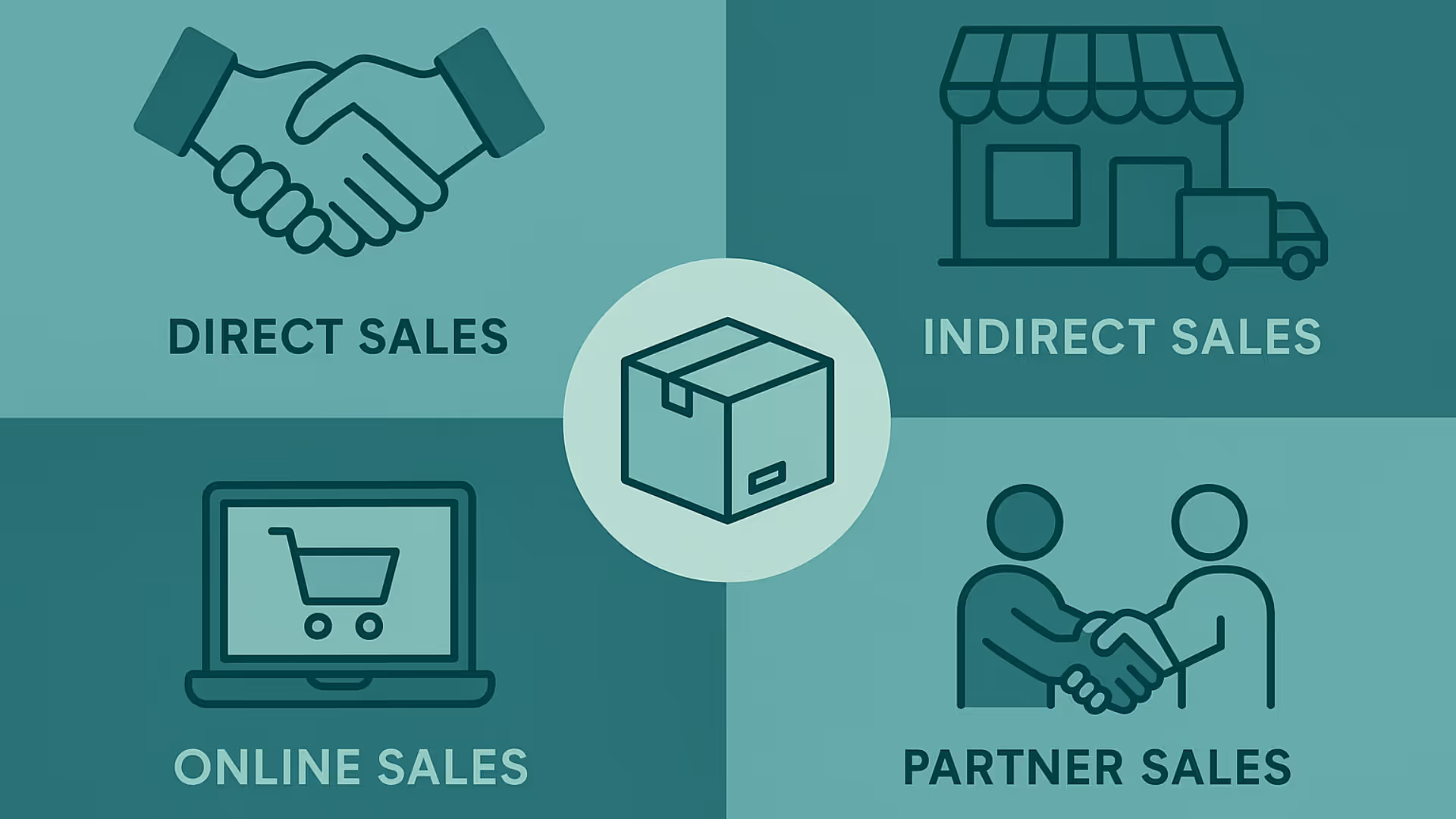


Sales channels are the paths businesses use to sell products or services to customers, both online and offline. From direct sales teams and digital platforms to partners and resellers, choosing the right sales channels directly impacts revenue, customer experience and scalability.
In this blog, I’ll explain what sales channels are, explore the different types of sales channels and break down common sales channel models. You’ll also learn how to choose the right sales channel for your business and how CRM systems help manage and optimise multiple sales channels effectively.
What are sales channels?
Types of sales channels
Direct sales channels
Direct sales channels involve selling products or services directly to customers without intermediaries. The business controls the entire sales process from customer interaction to closing sales.
Common direct sales channels include:
- In house sales teams
- Company owned retail stores
- Direct website sales
When direct sales channels work best:
- High value or complex products
- B2B and SaaS sales
- Businesses that want complete control over customer experience and pricing
Example: A SaaS company selling subscriptions through its website and in-house sales representatives.
Indirect sales channels
Indirect sales channels involve third parties that help sell a company’s products or services. These intermediaries act as a bridge between the business and the end customer.
Common indirect sales channels include:
- Distributors
- Wholesalers
- Resellers
- Agents
When indirect sales channels work best:
- Expanding into new markets quickly
- Selling physical products at scale
- Reducing the cost of building an in-house sales force
Example: A manufacturing company selling products through regional distributors and retailers.
Online/digital sales channels
Online or digital sales channels use the internet and digital platforms to sell products or services. These channels enable businesses to reach a wider audience with lower operational costs.
Common online sales channels include:
- Company websites and e commerce stores
- Online marketplaces
- Social media platforms
- Mobile apps
When digital sales channels work best:
- Reaching a large or geographically dispersed audience
- Selling standardised or low-to-mid priced products
- Shortening the sales cycle through self-serve purchasing
- Reducing customer acquisition and operational costs
Example: An e-commerce brand selling products through its website and third-party marketplaces.
Partner sales channels
Partner sales channels rely on strategic partnerships where external organisations sell or promote a company’s offerings as part of a long term collaboration.
Common partner sales channels include:
- Technology partners
- Channel partners
- Affiliate partners
- Referral partners
When partner sales channels work best:
- Entering new industries or regions
- Selling complementary products
- Leveraging partner trust and existing customer bases
Example: A CRM company partnering with consulting firms that recommend and implement its software for customers.
Sales channels vs Distribution channels
Common sales channel models
Single channel sales
Single-channel sales use one sales channel to sell products or services. This model is simple to manage and works well for early-stage or niche businesses, but growth is limited due to reliance on a single channel.
Multi-channel sales
Multi-channel sales involve selling through multiple independent channels such as a website, sales team and partners. It helps businesses reach more customers but can lead to inconsistent customer experiences if channels are not aligned.
Omnichannel sales
Omnichannel sales integrate all sales channels into a unified system, ensuring a seamless customer experience across touchpoints. This model improves customer satisfaction and conversions but requires strong data and CRM integration.
How to choose the right sales channel?
Understand your target audience
Start by identifying where your customers prefer to discover, evaluate and purchase products. B2B buyers may expect demos and consultations, while B2C customers often prefer quick, self-serve options.
Consider product complexity and price
High-value or complex products usually perform better through direct or consultative sales channels. Low-cost or standardised products are well-suited for online or indirect channels.
Evaluate your sales cycle length
Long sales cycles benefit from direct engagement and relationship-building, while shorter sales cycles work well with digital or self-service channels.
Assess cost and scalability
Some sales channels require higher upfront investment but offer better control, while others scale faster with lower operational costs. Choose channels that align with your growth stage and budget.
Test and optimise continuously
Sales channels are not fixed. Monitor performance, experiment with new channels, and refine your strategy based on data and customer feedback.
Role of CRM in managing sales channels
A CRM like Superleap plays a crucial role in centralising and optimising multiple sales channels by ensuring that customer data, leads and performance insights are available in a single place.
Lead routing across channels:
CRM systems automatically capture leads from different sales channels such as websites, sales teams and partners and route them to the right salesperson or team, reducing response time and missed opportunities.
Channel performance tracking:
By tracking deals, conversions and revenue by channel, CRM helps businesses understand which sales channels perform best and where optimization is needed.
Partner management:
CRMs enable businesses to manage partner relationships by sharing leads, tracking partner-driven deals and maintaining visibility into partner performance without manual coordination.
Best practices for optimising sales channels
- Regular channel performance reviews
- Align sales and marketing departments
- Invest in enablement tools
- Test and optimise continuously




%201%20(1).svg)
.svg)
.svg)
.svg)
.svg)