


CRM goals are the business outcomes a company wants to achieve by using customer relationship management processes and software. These goals can include improving customer relationships, increasing sales, retaining customers, centralizing customer data, improving service, and making better decisions with customer insights.
Clear CRM goals help businesses determine what they want their CRM to accomplish and how they will measure its success. Instead of simply using a CRM to store customer information, businesses can align CRM activities with measurable outcomes such as higher conversion rates, shorter sales cycles, lower churn, improved customer satisfaction, and increased customer lifetime value.
Let's understand further.
Key objectives of CRM
1. Improve customer relationships
The main goal is to build and maintain long-term customer relationships through consistent engagement and support.
2. Enhance customer retention
Use CRM to track customer issues, personalize interactions and ensure timely responses to improve loyalty.
3. Increase sales and revenue
Streamline lead management, sales tracking and follow-ups to boost conversion rates and repeat purchases.
4. Optimise marketing efforts
Use data driven segmentation and targeted campaigns to reach the right audience with the right message.
5. Improve customer service efficiency
Centralise customer data to provide faster, more personalized service and resolve issues quickly.
6. Enable data driven decision making
Analyse customer insights to identify trends, forecast demand, and refine strategies.
7. Improve team collaboration
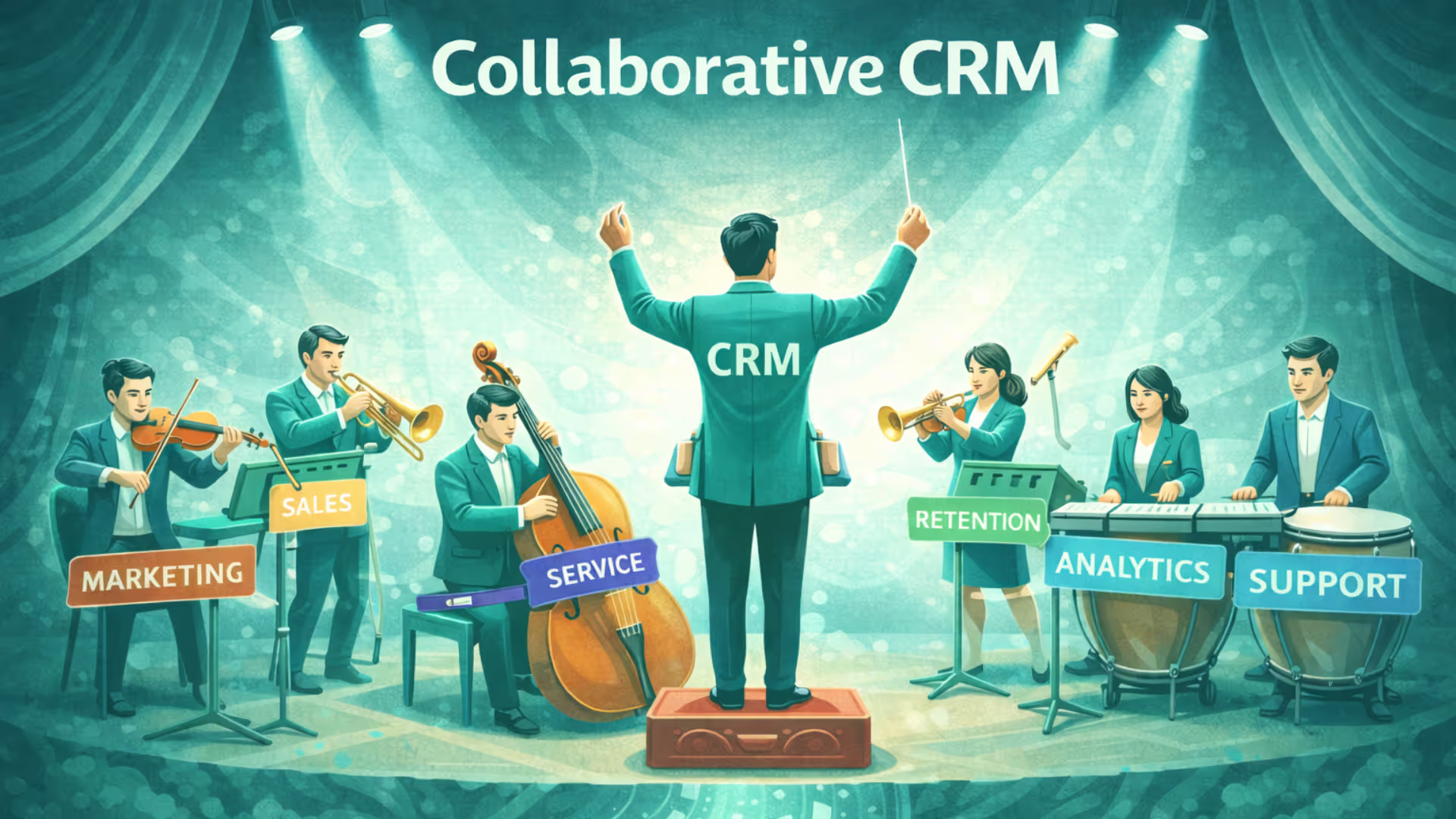
Connect marketing, sales and support teams through shared customer data and unified communication.
8. Automate routine tasks
Reduce manual work through workflow automation, freeing up teams to focus on customer engagement.
9. Shorten the sales cycle
A CRM can help sales teams shorten the sales cycle by tracking every opportunity, identifying stalled deals, automating follow-ups and giving representatives visibility into the next action required.
10. Centralize customer data
One of the fundamental goals of CRM is to create a centralized source of customer information. Instead of keeping contact details, interaction history, sales activity and support records across spreadsheets, emails and separate systems, businesses can organize this information in a shared CRM database.
Conclusion
CRM objectives are the direct, measurable outcomes that maximise profitability and customer lifetime value. They center on three core areas: improving customer retention and relationships, driving revenue through increased sales and targeted marketing and boosting operational efficiency by centralising data, enabling data driven decisions and automating tasks. Achieving these objectives is the path to customer centric and profitable business model.



.avif)
%201%20(1).svg)
.svg)
.svg)
.svg)
.svg)