


Today, a sale doesn't always happen across a store counter, a sales meeting, or a face-to-face conversation. A customer might discover a product on Instagram, compare it on a website, ask a question over WhatsApp, attend a demo over Zoom, and complete the purchase without ever meeting the seller in person.
That is the basic idea behind digital sales: using digital channels and tools to move a buyer from interest to purchase.
What are digital sales?
All businesses have picked up on the trend and are available on the internet to widen their audience and increase sales.
Digital sales can include a completely self-serve purchase, such as an ecommerce checkout, but it can also involve a salesperson. A B2B buyer might discover a company online, speak to a sales rep through email or video calls, review a digital proposal, and sign the agreement electronically.
So, digital sales is broader than ecommerce and it is different from digital marketing, too.
At its simplest: digital marketing creates awareness and demand, while digital sales turns relevant interest into a transaction or signed deal through digital channels.
To understand this better, let’s look at a few examples of digital sales.
Digital sales vs digital marketing
Digital sales and digital marketing often work together, but they have different jobs. Digital marketing is primarily about generating awareness, interest, traffic, and leads. Digital sales is more focused on converting that interest into revenue.
Digital sales vs traditional sales
Traditional sales rely heavily on face-to-face meetings, physical paperwork, and location-dependent processes. Digital sales, on the other hand, happens across online channels where buyers research, evaluate, and interact before ever speaking to a salesperson.
In digital sales, prospects may discover a product through content, ads, or social media, engage via email or chat, attend a virtual demo, and complete the purchase online - often without meeting a sales rep in person.
Digital channels can make parts of the sales process easier to scale, measure, automate, and access remotely. But digital does not automatically mean faster or better. A poorly designed online buying process can create just as much friction as a poor offline one.
What are the types of digital sales?
Digital sales do not all work the same way.
1. Self-serve digital sales
The customer researches, evaluates, purchases, and completes the transaction mostly without a salesperson. Ecommerce is the most obvious example.
2. Sales-assisted digital selling
The buyer interacts with a salesperson digitally through email, social media, chat, video calls, digital proposals, or other online channels. The sales rep still guides the decision, but the interaction is primarily digital.
3. Hybrid digital sales
Some parts of the journey are self-serve while others involve a salesperson. For example, a buyer may research a SaaS product online, sign up for a trial, book a demo, speak to an AE, and then complete the purchase through an online agreement.
This distinction matters because the sales process, tools, and metrics can be very different across these three models.
What are some examples of digital sales?
E-commerce transactions
Websites and mobile applications are a great way to make buying easier for the customer. It’s also a credible source to learn more about the brand.
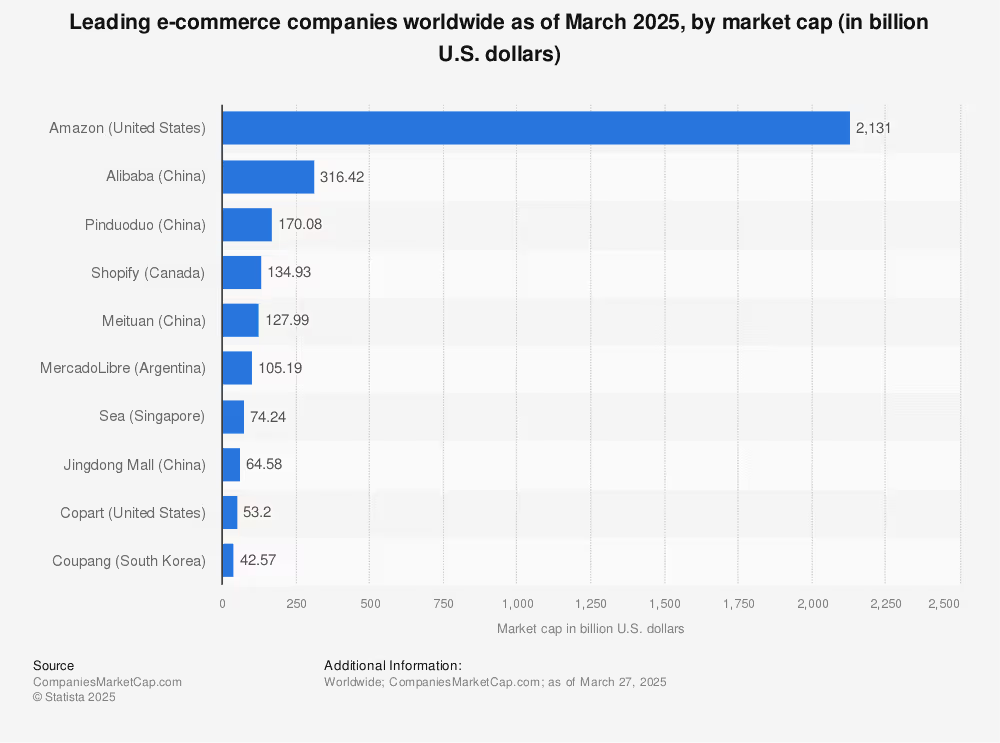
A typical ecommerce sale might look like this: discover a product → compare options → read reviews → add to cart → complete payment. The entire transaction can happen without a salesperson becoming involved.
Retailers like Amazon and Flipkart have been ruling the e-commerce industry for more than 10 years now. As of December 31, 2024, Amazon's annual revenue touched 638 billion U.S. dollars according to Statista.
Subscription based service
Companies offer digital products or services online on a subscription basis to users.
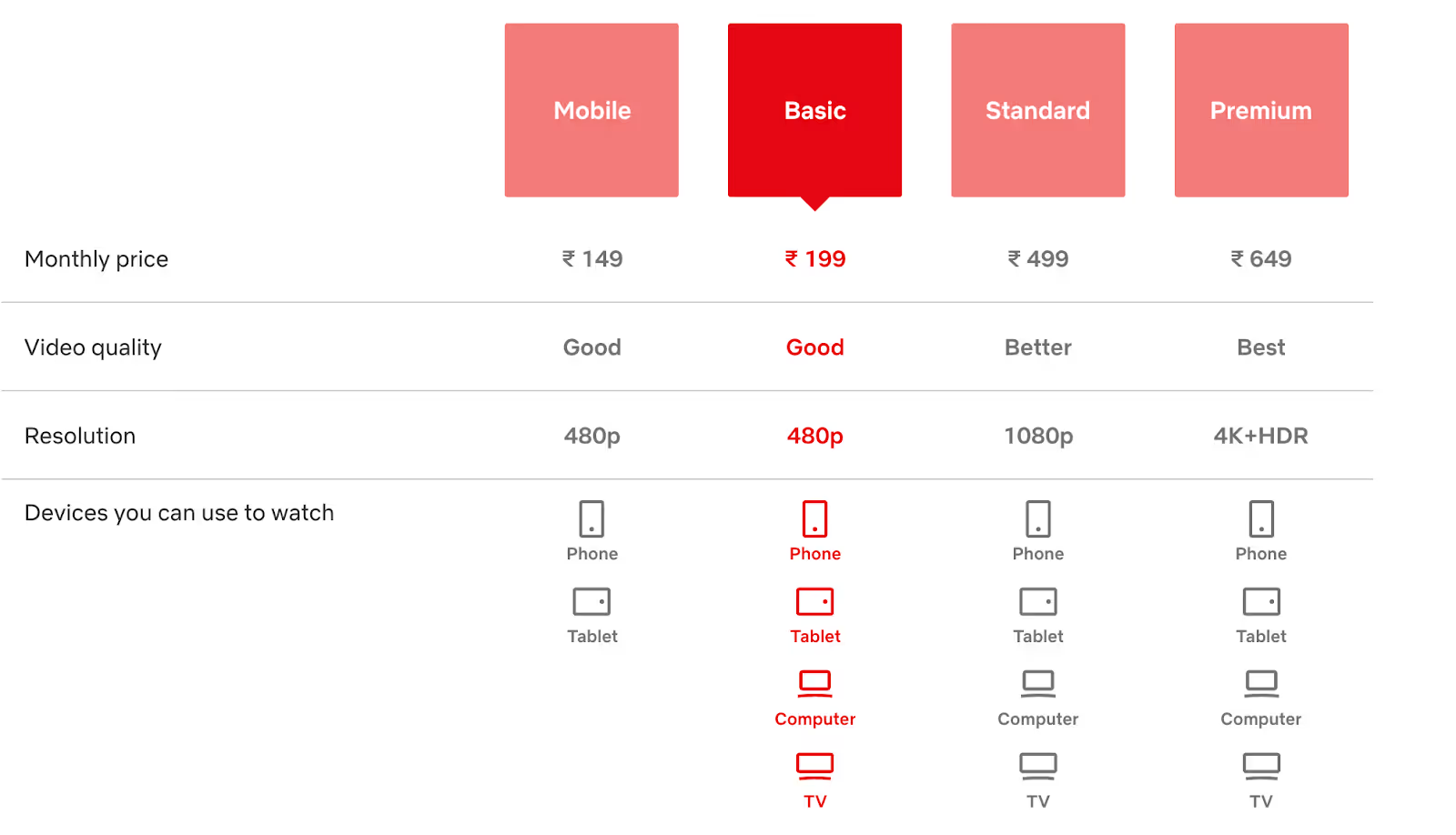
Chatbots and recommendation engines powered by AI are enhancing customer experiences. Netflix uses AI to recommend shows based on viewing history.
A SaaS company can follow a similar model: a prospect discovers the product online, signs up for a trial, receives product communication, chooses a plan, and subscribes digitally.
Online consultation
Sometimes, professionals provide their services via online conferencing platforms like Gmeet, Zoom, etc.
A consultant, trainer, agency, or professional can also sell services digitally. A potential client may find the business online, complete an enquiry form, attend a virtual consultation, receive a proposal by email, and sign digitally.
BetterHelp, an online therapy platform, uses targeted digital ads and content marketing to attract users. Its personalized onboarding process matches users with therapists based on their needs, increasing conversion rates and satisfaction.
What are some digital sales strategies to employ?
Content marketing
Content marketing can absolutely support digital sales, but it belongs primarily to the marketing side of the funnel. Rather than treating it as a direct sales tactic, think of it as one source of demand that can feed the sales process.
1. Social selling
Use social platforms to identify relevant prospects, engage with their content, share useful insights, and start conversations that can eventually move into a sales process.
2. Personalized sales outreach
Digital outreach works better when it reflects something relevant about the prospect, account, previous conversation, or stated problem rather than simply inserting the person's name into a generic template.
3. Virtual selling
Use video calls, screen sharing, virtual demonstrations, online presentations, and digital proposals to conduct sales conversations without requiring the buyer and seller to be in the same location.
4. Digital sales rooms
For complex B2B deals, a digital sales room can bring proposals, presentations, documents, demos, and other deal-specific information into one shared online space.
5. Chat-assisted selling
Chat can help answer routine questions, qualify visitors, book meetings, and route higher-intent conversations to a salesperson.
6. Automate repetitive follow-ups
Automating simple tasks like email for onboarding, engagement and even follow ups can save a lot of time, allowing sales teams to focus on achieving their quota.
Use automation for predictable work such as reminders, lead assignment, follow-up tasks, or routine communication. Keep conversations that require context, negotiation, or judgment human-led.
Zomato automates email reminders for incomplete cart orders, special deals, and personalized recommendations to eat during peak hours.
7. Segment customers and personalize the sales experience
Segment your target audience and craft personalized messages to grab their attention. This can increase engagement and conversion rates.
You can gather information on customer behavior to provide personalized recommendations that enhance their shopping experience.
Segmentation can also help sales teams decide what information to show different audiences. A first-time buyer may need education and reassurance, while an existing customer may need a renewal reminder or a relevant expansion conversation.
8. Reduce friction in the buying process
Make the next step obvious. Keep forms manageable. Make pricing and product information easy to understand. Offer convenient scheduling. Remove unnecessary steps between interest and purchase.
The goal isn't simply to make a website look good. It is to make the buying process easier to complete.
9. Multichannel marketing
Digital selling can happen across several channels, but the important part is connecting the experience. If a prospect begins a conversation on WhatsApp and later speaks to a salesperson over email, relevant context should not disappear between the two interactions.
10. Segment the customers and personalize messages
Segment your target audience and craft personalized messages to grab their attention. This can increase engagement and conversion rates.
You can gather information on customer behavior to provide personalized recommendations that enhance their shopping experience.
Amazon's recommendation engine suggests products based on past purchases and browsing history, increasing the likelihood of additional sales.
11. Paid advertising
Paid advertising belongs primarily to digital marketing, but it can support digital sales by bringing qualified traffic into the buying journey. The key is what happens after the click: does the landing page, sales process, or checkout make conversion easy?

What are the main digital sales channels?
Different businesses use different combinations of digital channels depending on how their customers prefer to buy.
Website
Can support self-serve purchases, enquiries, demo bookings, consultations, product education, and quote requests.
Useful for prospecting, follow-ups, proposals, reminders, and ongoing customer communication.
Social media
Can support social selling, direct conversations, product discovery, and customer engagement.
Chat
Useful for answering questions, qualifying visitors, scheduling meetings, and routing sales conversations.
Video
Supports remote discovery calls, demos, consultations, presentations, and negotiations.
Digital marketplaces
Allow customers to discover, compare, and purchase products through third-party platforms.
Digital sales rooms
Useful for more complex B2B deals where multiple stakeholders need access to proposals, documents, presentations, and other deal-specific information.
How to monitor the success of digital sales?
Conversion Rate
Conversion rate measures the percentage of relevant users or prospects who complete a defined desired action. That action could be a purchase, signup, demo request, quote request, application, or another sales milestone.
How to calculate conversion rate?
Average Order Value (AOV)
Average order value refers to the average amount of money a customer spends per transaction.
How to calculate AOV?
Customer Acquisition Cost (CAC)
This refers to the cost of acquiring a new customer.
How to calculate CAC?
Customer Lifetime Value (CLV)
This refers to the total revenue expected from a customer over their entire relationship with the business.
For a subscription business, this can be tied to the expected customer relationship over the subscription period. For ecommerce, it can reflect repeat purchases. For B2B, it may reflect the expected value of the account over the relationship.
Click-Through Rate (CTR)
This refers to the users who actually click on an ad link compared to the total number of users who viewed it.
CTR is primarily an acquisition or advertising metric rather than a direct measure of sales. It can still be useful upstream when evaluating whether digital campaigns are generating interest that eventually feeds the sales funnel.
What are the tools and technology for digital sales?
Customer Relationship Management (CRM)
When to use: When you struggle to manage leads or track your sales pipeline.
What it does: CRM tools like Superleap help keep track of customer data, leads, reminders, how many convert into paying customers, and how many more deals are yet to come to a close.
Implementation tip: Start by importing your existing customer data and setting up automated workflows like follow-up reminders.
Analytics and data visualisation
When to use: If you need to understand customer behavior and track sales performance.
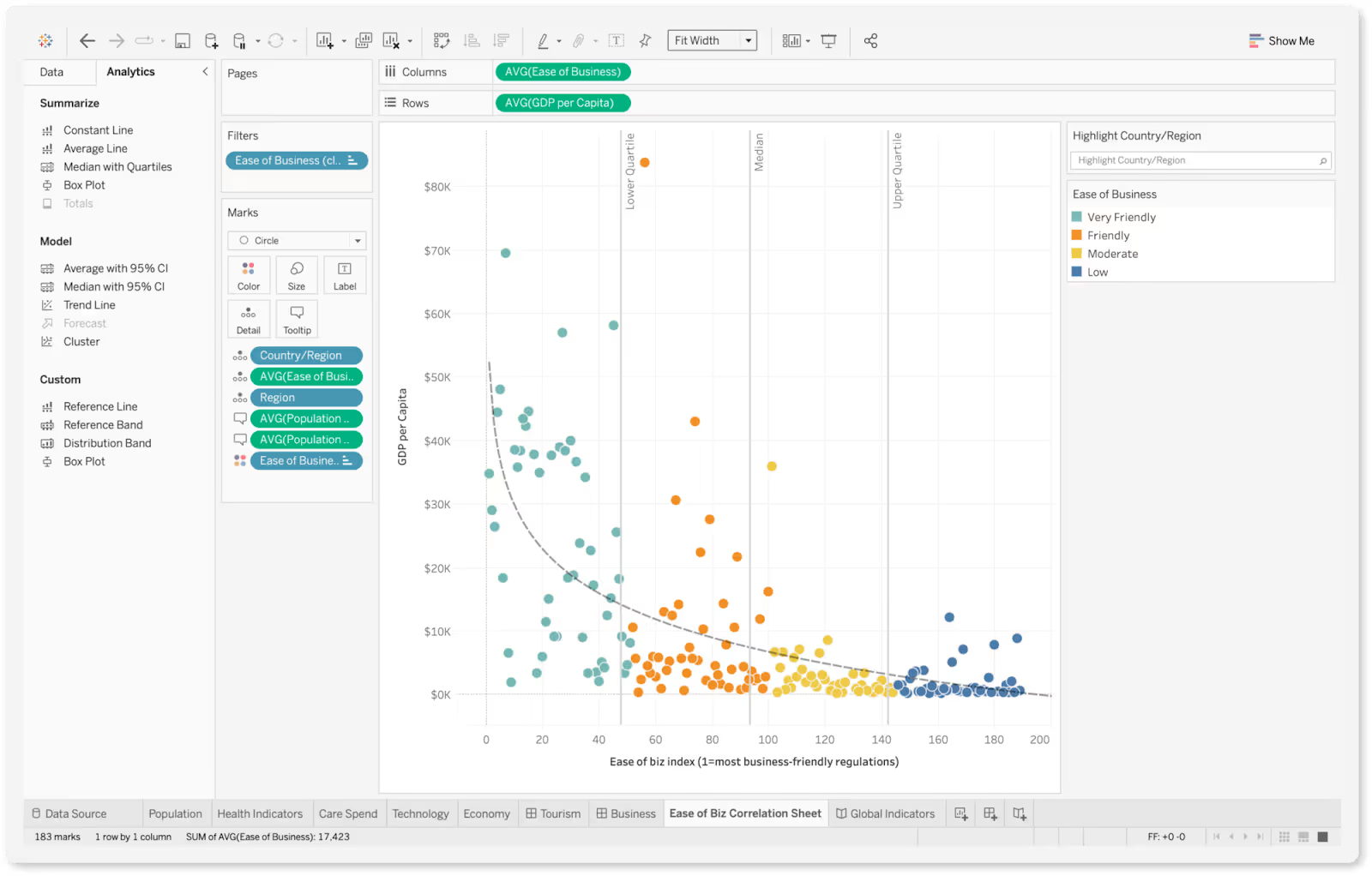
What it does: Tableau features dashboards, interactive visualizations, calculated fields and live data connectors to sources like CRM platforms, Google Analytics, and Shopify, which help businesses track their digital sales performance, understand customer behavior, and make data-driven decisions.
Implementation tip: Identify key metrics you want to track (e.g., AOV, CAC) and customize dashboards to display them in real time.
Marketing automation
When to use: If you want to save time on repetitive tasks like email campaigns.
What it does: Mailchimp automates welcome emails, abandoned cart reminders and promotions. You can also schedule social media posts prior and save time.
{{callout-1}}
Sales engagement tools
When to use: When your sales team spends significant time managing outbound emails, follow-ups, or sales sequences.
What they do: Sales-engagement tools can organize outreach, reminders, sequencing, and other repetitive sales activity.
Video and meeting tools
When to use: When discovery, demos, consultations, or negotiations happen remotely.
What they do: Video platforms support virtual meetings, presentations, demonstrations, and sales conversations.
Chat and conversational tools
When to use: When buyers frequently ask questions or request help before speaking with a salesperson.
What they do: Chat tools can answer routine questions, collect information, schedule meetings, or route conversations to the appropriate team.
Digital sales rooms
When to use: When a B2B deal involves multiple stakeholders and a large amount of sales material.
What they do: They provide a shared online space for proposals, presentations, documents, demos, and other deal-specific content.
How CRM supports digital sales
A CRM becomes the central layer connecting many of these digital interactions. It can store customer and prospect data, track opportunities, record communication, manage follow-ups, and give the sales team visibility into what happens next.
For example:
Website enquiry → CRM record → lead assigned → follow-up → demo → opportunity → proposal → closed deal
Without a connected system, those interactions can end up spread across email, spreadsheets, calendars, chat, and separate sales tools. A CRM gives the sales team a common place to manage the relationship.
Legal and ethical considerations in digital sales
As businesses move online, adhering to legal and ethical standards is crucial.
Data privacy compliance
Ensure your sales processes comply with laws like GDPR and CCPA.
For example, always obtain user consent before collecting data and provide an option to opt out of marketing communications.
Transparency
Be honest about product features, pricing, and shipping timelines to build trust. Avoid misleading sales promotions like "limited-time offers" when they aren’t truly limited.
Secure transactions
Use secure payment gateways to protect customer data and prevent fraud.
Case studies of successful digital sales implementations
Walmart was founded by Sam Walton in 1962 in Rogers, Arkansas. His vision was to offer products at low prices to achieve higher-volume sales.
Walmart’s early years focused on targeting underserved rural areas, avoiding direct competition with urban retailers. They invested in logistics and distribution to reduce costs and pass savings to customers, making their supply chain efficient.
Slowly, when there was a shift in the market and everyone was adapting towards e-commerce, Walmart implemented several strategies. Their e-commerce expansion included acquiring Jet.com for $3.3 billion in 2016, competing with Amazon by improving its online presence and expanding its product offerings. The omnichannel strategy of grocery pickup service bridged the gap between online and offline sales. Customers could order online and pick up in-store, boosting convenience.
Walmart began testing a free grocery pickup service, allowing customers to order online and pick up at stores. By 2017, this service expanded to 39 U.S. states. Utilizing its vast network of physical stores as distribution hubs, Walmart enhanced its delivery capabilities. In the past year, the company delivered five billion items on the same day, leveraging services like the Spark driver system.
As of January 2025, Walmart's revenue reached $681.985 billion, maintaining its position as a global retail leader. Post the Jet.com acquisition, Walmart's U.S. e-commerce sales grew by 44% in the first full year. The company continues to enhance its online offerings, integrating services like grocery pickup and delivery.
Investing $9 billion to renovate over 1,400 stores nationwide, Walmart aims to attract a broader customer base by enhancing in-store experiences.

Tesla was founded by Martin Eberhard and Marc Tarpenning in 2003, with Elon Musk joining shortly after as an early investor and chairman. The company set out to revolutionize the automotive industry by producing electric vehicles (EVs) that delivered both performance and sustainability.
In its early years, Tesla focused on building high-end electric sports cars like the Roadster to prove that EVs could compete with traditional gasoline vehicles. Over time, the company shifted toward producing more accessible models like the Model S, Model 3, Model X, and Model Y, aiming to accelerate the world’s transition to sustainable energy.
Rather than relying on traditional dealership models, Tesla adopted a direct-to-consumer online sales strategy. Customers could configure and order their vehicles entirely through the company’s website, eliminating the middleman and offering a seamless, transparent buying experience. Minimalistic showrooms were opened globally to serve as product experience centers, while actual sales transactions happened online, reducing operational expenses.
To build anticipation for upcoming models, Tesla accepted pre-orders with small, refundable deposits - a move that not only generated excitement but also secured early cash flow. The company also introduced a referral program, rewarding existing customers with incentives like free Supercharging miles or discounts on future purchases for bringing in new buyers.
By 2024, Tesla’s direct sales strategy and growing product lineup contributed to $97.69 billion in revenue as per Statista. Online pre-orders and a strong digital presence have been pivotal to Tesla’s growth, positioning it as a leader in the high-tech automotive market.
Automotive CRM is also gaining traction as the car industry continues to roll out new innovations, every passing moment.
{{callout-2}}
How to automate emails on mailchimp?
All you have to do is login to your account, click on automations, then on create, pick your preferred automation type, set a trigger event, design the email template, decide when these emails have to be sent (immediately, after 1 hour, a day) and activate the process.
The email might say, “Forgot something? Complete your order now and get 10% off!”
The digital landscape is evolving fast, and businesses are adapting with it. In the near future, digital sales will dominate the buying and selling experience. If you haven’t made the shift yet - now’s the time.




%201%20(1).svg)
.svg)
.svg)
.svg)
.svg)