
.avif)


According to MarketingSherpa, “79% of marketing leads never convert into sales. Lack of lead nurturing is the common cause of this poor performance” Most leads never become customers, and slow or inconsistent follow-up is a common reason.
This guide covers what sales conversion means, how to calculate your conversion rate, and the tactics that raise it. Use the calculator below as you read.
What is sales conversion?
Sales conversion is the moment a prospect becomes a paying customer, and the process of moving them there. It covers every step from first interest to closed sale, such as qualifying, following up, presenting, and negotiating.
Imagine you own a store, and 50 people have walked in. If you converted 10 of them into actual buyers, you have successfully moved them from ‘just looking’, which is the consideration stage, to ‘buying’, the decision stage of the sales process. That is a 20% conversion.
In case of an online business, it could be converting a website visitor into a paying customer, or inquiries into confirmed sales. In B2B sales, it means moving a lead through your pipeline, from qualified lead to demo to proposal, until they sign. The goal is to guide potential customers through a journey where they feel confident and motivated to take action.
What is a sales conversion rate?
Sales conversion rate refers to the percentage of leads (or visitors) that become paying customers.
It’s a key metric that tells you how well your business is performing in terms of converting interest into sales.
How to calculate sales conversion rate?
For example, if 500 people visited your website, and 50 of them made a purchase, your conversion rate would be:
This means 10% of your visitors actually turned into paying customers.
How does a sales conversion happen?
The sales funnel stage is the customer’s journey with a product (we will understand this in detail), and pipeline stages outline a salesperson’s process of onboarding a client.
Stage #1 Awareness
Customers in this stage are just discovering your product/service. They might see an ad, come across a blog post, or hear about you from a friend.
The best way to optimize this stage is by creating valuable content like SEO blogs, videos, infographics, webinars or guides. The more people you attract at the awareness stage, the more potential customers you have.
Stage #2 Consideration
During this stage, customers are interested in your product/service but still browsing for better offerings.
The best way to attract and capture your audience here is to use email marketing, outbound calls, offering free trials or discounts, showing testimonials and reviews to instill trust and establish credibility. If you don’t nurture interest, many leads will drop off before reaching the decision stage.
Stage #3 Decision-making
The customer here is close to buying. It is important that your team is well trained, and answers remaining questions by tailoring responses to their requirements.
Complete the transaction and make sure support is easy to reach in case of inconvenience later on. A great post-purchase experience leads to repeat sales and referrals.
What is the importance of tracking sales conversion rate?
It helps you identify bottlenecks in the sales funnel
A low conversion rate tells you something is off, but not where. Track the rate at each stage to find the weakest one.
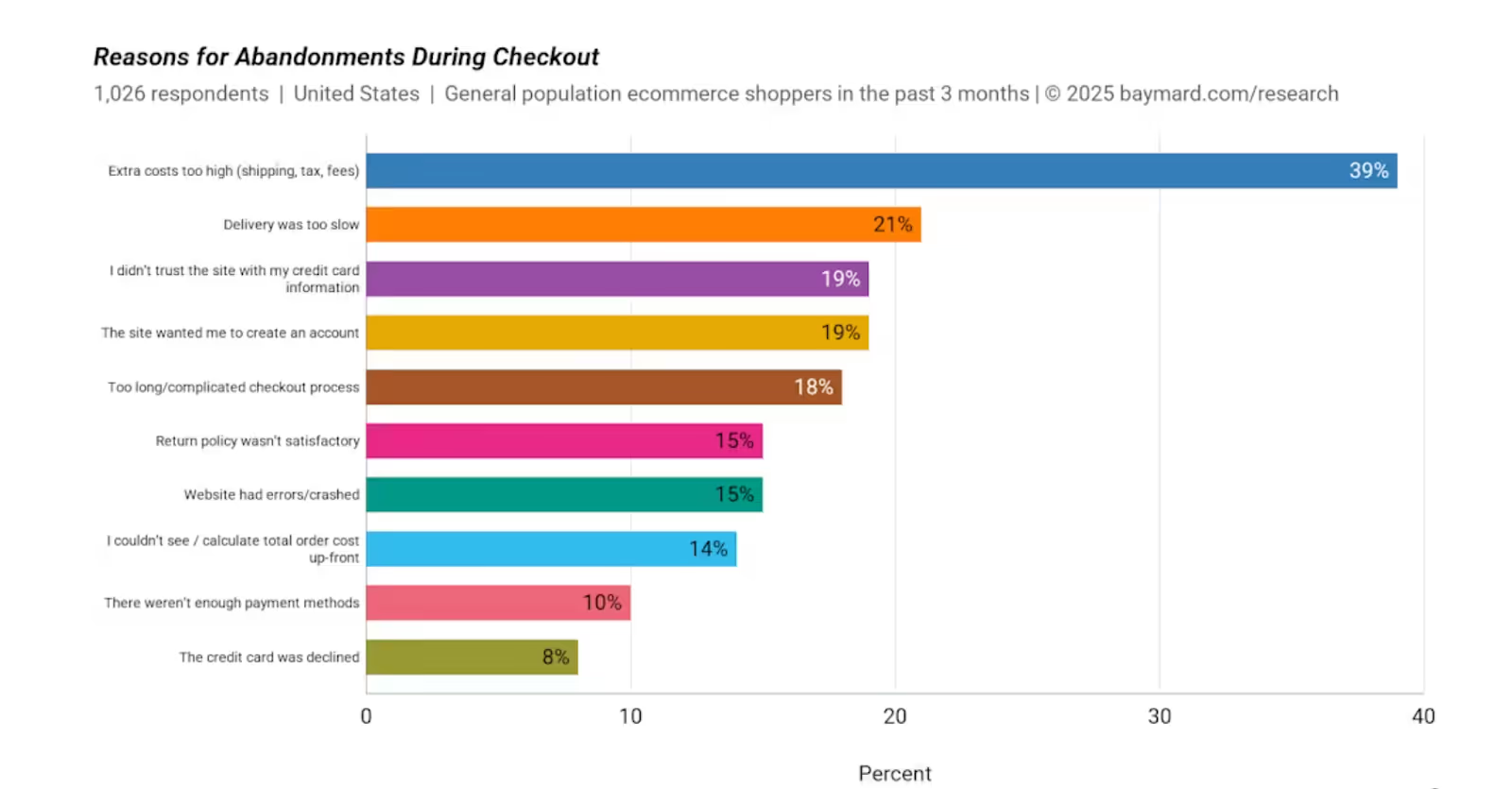
For example, you run an e-commerce website. There are 1,000 people visiting your website, 300 adding products to their cart but only about 50 complete the purchase.
Overall, that is (50 ÷ 1,000) × 100 = 5%. At the stage level, 30% of visitors add to cart (300 of 1,000), but only about 17% of those carts end in a purchase (50 of 300), so the problem sits between cart and checkout. Maybe your shipping fees are too high or the checkout process is confusing. Once you track the conversion rate at each stage, you can fix these issues and improve sales.
It helps you improve marketing ROI
You spend money on marketing like running ads, email campaigns, content marketing and social media. But how do you know if your marketing is actually working? Tracking your conversion rate will tell you which marketing channel brings the best results.
For example, to increase the visibility of your e-commerce website, you invest in:
Google ads > 2000 visitors > 30 purchases (1.5% conversion rate)
Email marketing > 1000 visitors > 40 purchases (4% conversion rate)
Instagram ads > 2,000 visitors > 50 purchases (2.5% conversion rate)
Here, email marketing converts best. To judge ROI, compare each channel’s revenue with what you spent on it. Now you know where to invest more for better results.
It helps you set realistic targets
You must be setting monthly or quarterly targets for your team to achieve. However, setting these targets randomly without any data can lead to frustration. Tracking conversion rates can help make these sales goals more realistic and achievable.
For example, your e-commerce website has a 5% conversion rate and you want to double next month’s sales from 50 to 100. So, to reach 100, you need (100 ÷ 0.05) = 2,000 visitors.
Now that your number is not random, use better marketing strategies, ideally ones that suit your business the most to bring in more traffic and improve conversions. Consider solving potential bottlenecks if any to make the process more efficient.
It helps you personalize & optimize sales strategies
Different customers have different likes and dislikes. Tracking your conversion rates will help you understand what techniques work the best, how to personalize messages and follow-up better, and to tailor your approach accordingly.
According to McKinsey, 71% of consumers expect personalization, and companies who deliver, see a 40% revenue from that area compared to their opponents. Test sending abandoned cart emails and include their name and mention a discount to grab their attention.
Let’s look at an example.
- “You left something behind - complete your purchase now!”
- “Hey Sarah, your favorite bracelet is still in your cart! Get 10% off if you order in the next 24 hours.”
In a test like this, email #2 could win because it feels more personal.
Why leads don’t convert
When conversion is low, the cause is usually one of these:
- Poor lead quality: you are attracting people who were never a fit.
- Slow response: the lead goes cold before anyone replies.
- Weak follow-up: one or two attempts, then silence.
- No clear next step: conversations end without a booked call or proposal.
- Price or value mismatch: the buyer cannot see why it is worth the cost.
- Strong competition: the buyer chose an alternative you did not counter.
How to improve your conversion rate, step by step
- Find the stage with the biggest drop using stage-level rates.
- Look for the cause, using the list above and conversations with buyers.
- Change one thing at a time, such as a call to action, a follow-up message, or a qualification rule.
- Test it on enough traffic or leads to see a clear difference, for example with an A/B test.
- Measure the result, keep what works, and move to the next biggest drop.
What are the strategies to maximize conversion?
Top of the Funnel TOFU Fixes (Attract & engage visitors)
Optimize your website
Just imagine this - you click on a website, and everything is cluttered with irrelevant images and a screaming font. Naturally, you will exit.
If you don’t want this to happen with your website, make sure it is easy to navigate, keeps the visitors engaged, proposes clear value, and guides them smoothly to the next step.
Use high-quality product images & descriptions
Let’s say you run an online jewellery brand - it may not be possible for customers to try them on. Therefore, your product pages need to be as visually descriptive and pleasing as possible to capture interest right away.
Write a clear CTA
Make sure your call to action is clear and crisp for your customer to act on it immediately. Use bold colors and curiosity-driven phrasing to increase click-through rates. Keep it specific, and test the wording and placement.
“Get Your Free e-book Now!” or “Download Now”, are examples.
Middle of the Funnel MOFU Fixes (Nurture leads & build trust)
Provide social proof
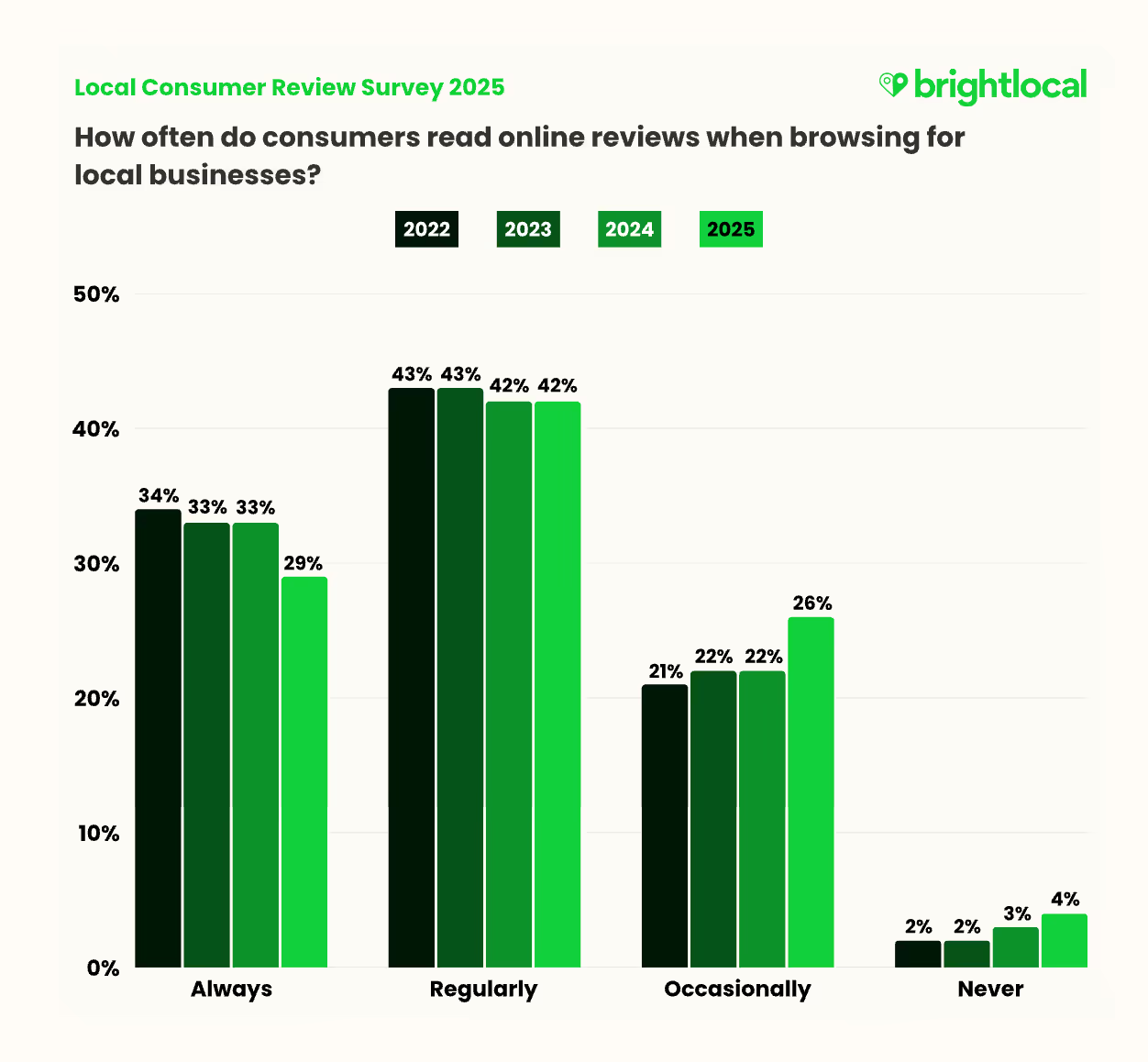
Before making a purchase, consumers check online reviews, testimonials, and ratings to gauge credibility. These elements serve as powerful trust signals, reassuring potential buyers about your brand’s quality and reliability.
Content marketing
Create valuable content like SEO blog posts, videos, e-books, infographics, and email newsletters to engage your audience. These measures are great for educating your leads and nurturing them toward a purchase decision.
Bottom of the Funnel BOFU Fixes (Convert leads into customers)
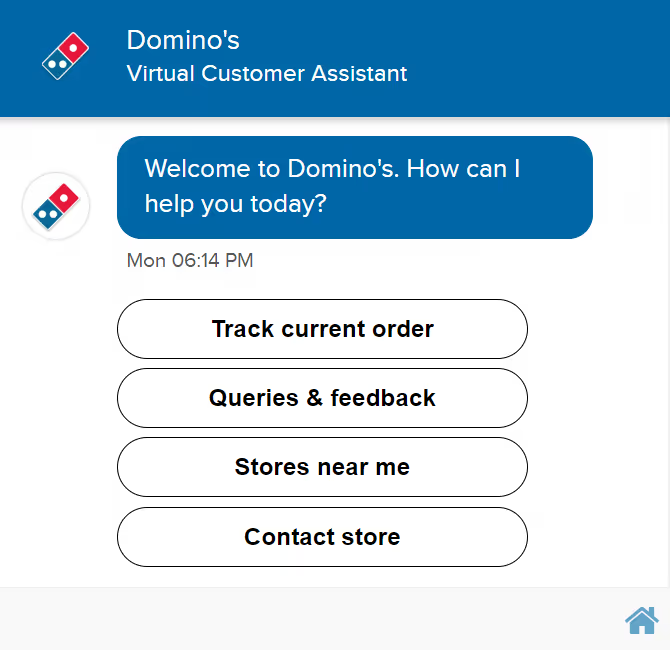
Include live chat & support
According to Baymard Institute, about 70% of shoppers abandon their carts for multiple reasons. One of the measures you can take to prevent this is adding a live chat feature to your website that helps solve queries instantly, providing real-time assistance that can help close the deal.
Offer limited-time discounts
People are more driven by the fear of missing out (FOMO) than the excitement of gaining something new.
Leverage this by offering flash deals or limited-time discounts to create urgency.
For example, show a real low-stock alerts like ‘Only 3 left in stock - order now!’ Use scarcity only when it is true.
What is the role of technology in sales conversion?
CRM tools and automation
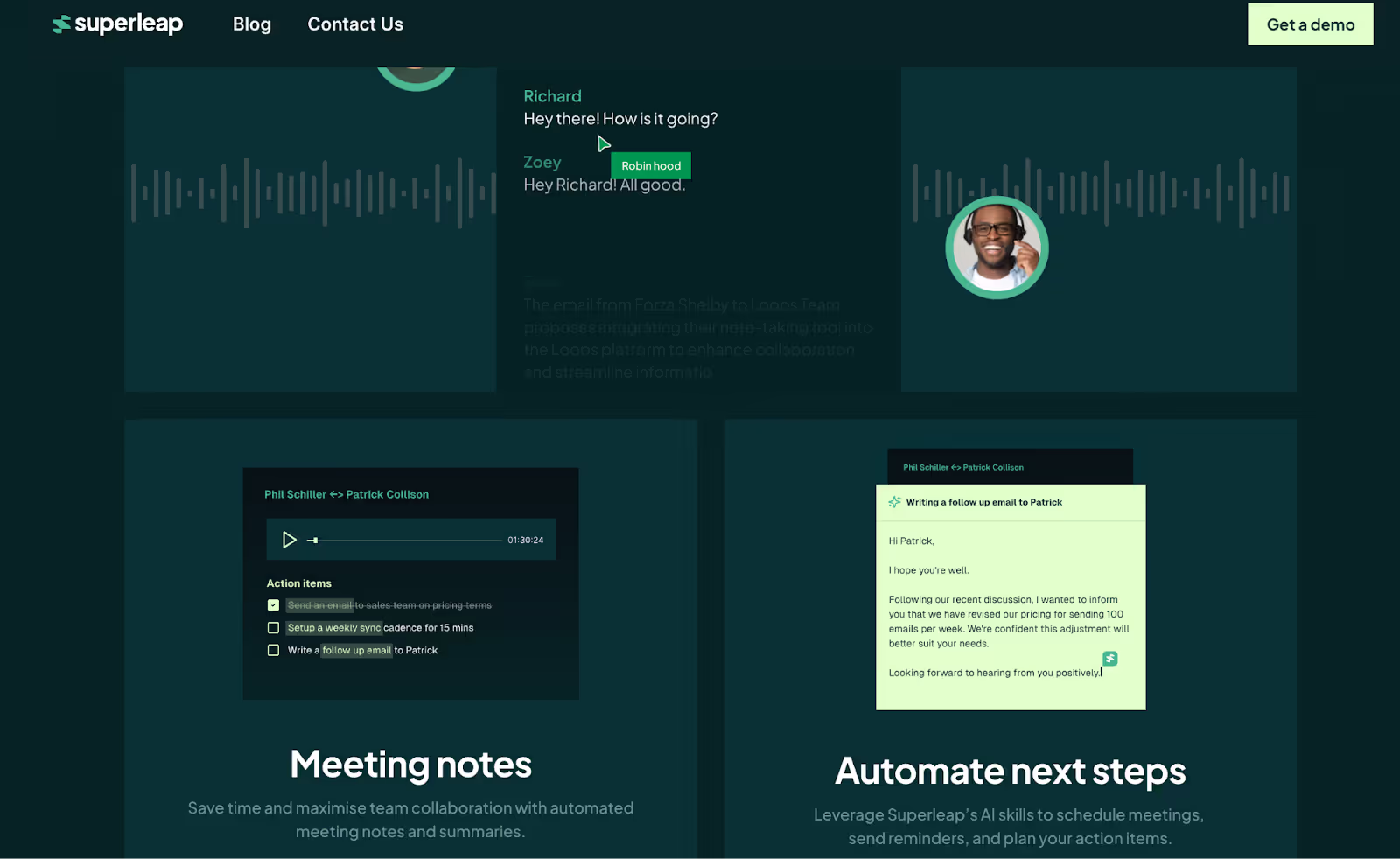
Automation within CRM helps make sure no lead is forgotten, by reminding reps to follow up and nurturing leads at the right time.
For example, imagine a customer visits your jewelry website, browses a few pendants and signs up for a newsletter but doesn’t complete their purchase.
A CRM like Superleap can help store customer details, track their website browsing history and send personalized reminder emails. In B2B sales, a CRM can log every touchpoint and create a follow-up task when a lead goes quiet.
AI chatbots and personalization
AI powered chatbots act as virtual sales assistants, and are available 24/7 to answer customer queries in real-time instead of waiting for a sales representative to pick the case. They can also ask qualifying questions and pass interested leads to reps.
Data analytics for conversion optimization
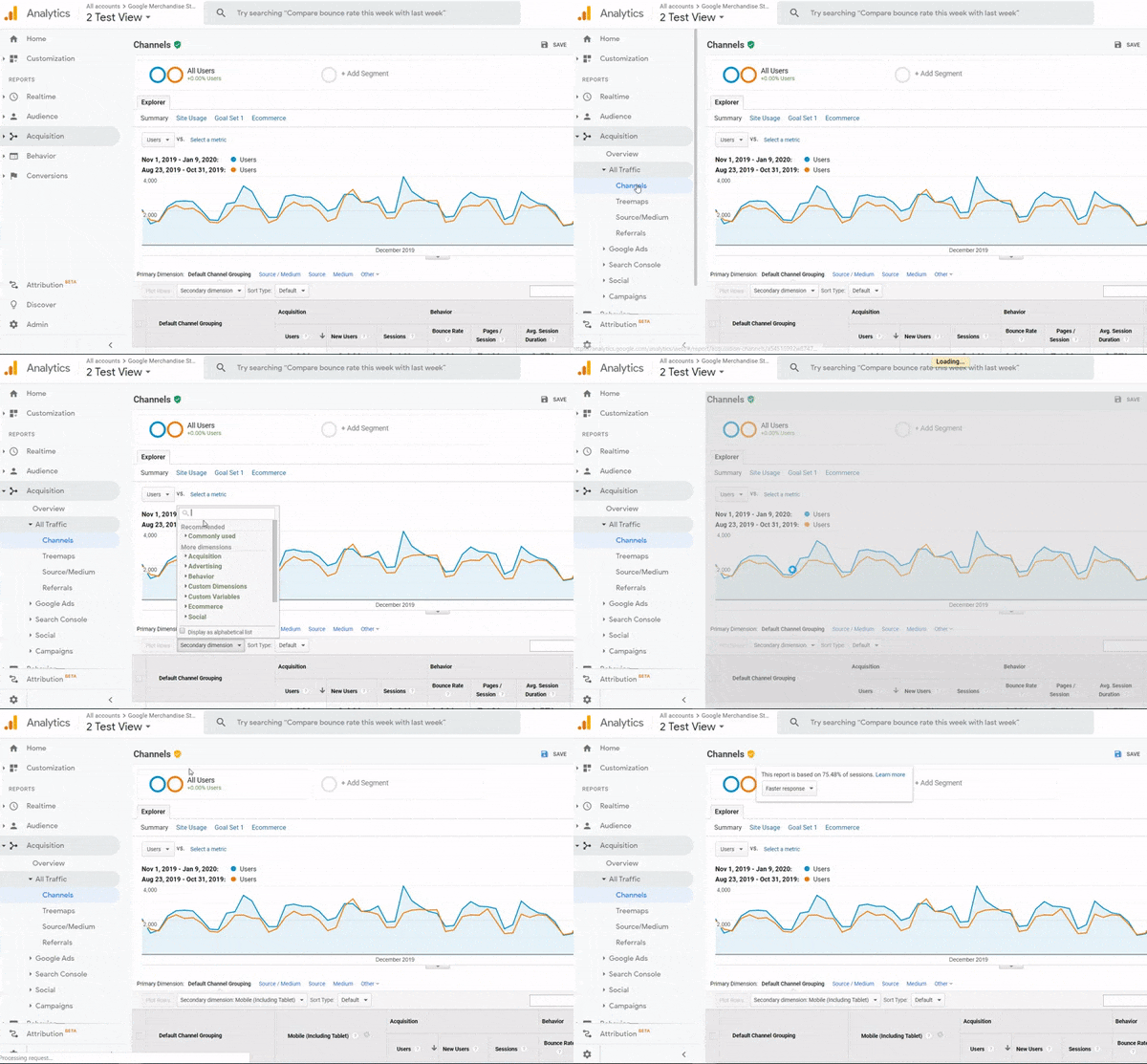
With the help of data analytics, you can analyze different customer behavior, sales trends and website performance to improve your conversion strategies.
Analytics can show which products are performing well, at which stage of the sales funnel are customers dropping off the most, and which marketing tactic brings in more leads.
How to measure conversion success?
Track key performance indicators
Monitoring key performance indicators will tell you how successful your conversion rate and strategies are. These include:
Stage-to-stage conversion: How many leads move from one stage of your pipeline to the next?
Win rate: How many opportunities turn into closed deals?
Average deal size: Are you closing high-value deals or low-value ones?
Sales cycle length: How long does it take to convert a lead?
Lead response time: How quickly do you reply to new leads?
Customer acquisition cost (CAC): How much are you spending to get a new customer?
Customer lifetime value (CLV): How much revenue does a customer bring over time?
For example, a B2B software company notices that its CAC is $200, but its CLV is $2,000. This indicates that while acquisition costs are high, the long-term revenue justifies the expense.
Compare against industry benchmarks
You should check with the average conversion rate of your industry and set a benchmark for yourself.
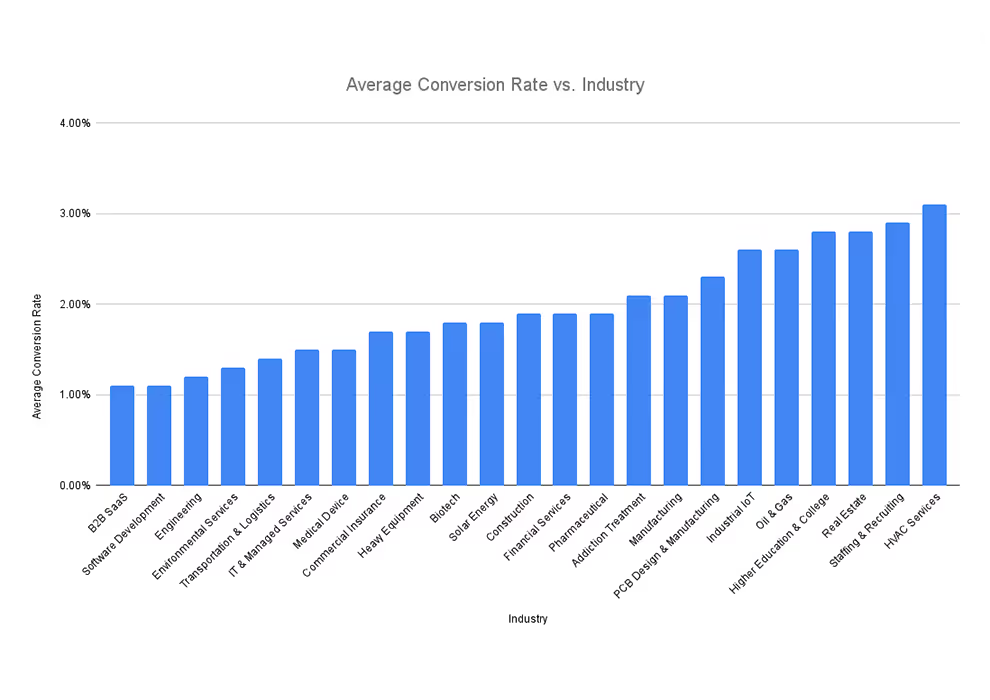
For example, if yours is a B2B SaaS industry, then your conversion rate should be between 1-2%. But if it’s 0.5%, that’s a red flag - you might need to optimize your strategies.
Track conversion rate over time
If your conversion rate is good, congratulations. But it doesn't end there. A successful sales conversion rate is the one that is consistent. A good conversion rate holds up over time, and a rising one is better still.
For example,
Month 1: 2% conversion rate (100 sales from 5,000 visitors)
Month 2: 2.5% conversion rate (125 sales from 5,000 visitors)
Month 3: 3% conversion rate (150 sales from 5,000 visitors)
An increasing conversion percentage is a sign that your marketing and sales efforts are working. Compare months using the same definition of conversion, and see how your results feed into sales growth.
Conclusion
Sales conversion comes down to knowing which rate you are measuring, finding the stage where people drop off, and fixing one thing at a time. Quick follow-up, early qualification, and a clear next step lift conversion for sales teams as much as a good website does for an online store.
To track stage-by-stage conversion and follow-ups in one place, see how Superleap AI CRM supports your sales team.



%201%20(1).svg)
.svg)
.svg)
.svg)
.svg)