
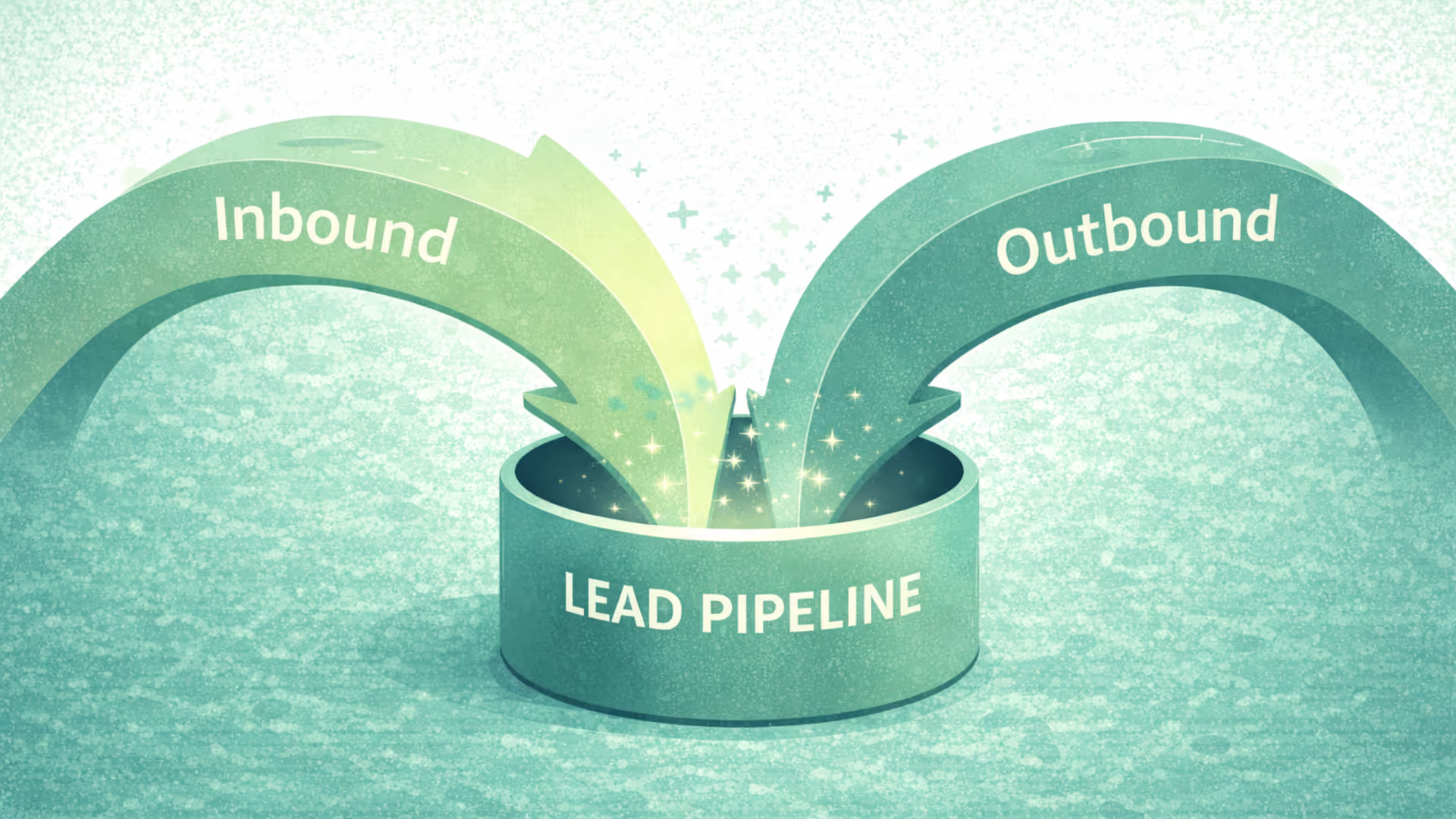


B2B lead generation is the engine that drives growth. Unlike B2C, it requires longer cycles, multiple stakeholders, and trust-building.
This guide explains the process, proven techniques, execution tips, and common challenges. Keep reading!
What is B2B lead generation?
A lead is a person or company that has shown interest or fits your target profile. A Marketing Qualified Lead (MQL) has engaged with your marketing, for example by downloading a guide. A Sales Qualified Lead (SQL) has been vetted by sales as a potential buyer. Lead generation also differs from demand generation: demand generation builds awareness of your category, while lead generation captures the details of people who show interest.
B2B (business-to-business) sales typically involve decision-makers like CFOs, procurement managers, or IT heads, which makes the sales cycle much longer and more complex.
For instance, a SaaS company might generate leads through LinkedIn campaigns targeting IT directors.
Lead generation is crucial for:
- Sustaining revenue growth.
- Maintaining competitive advantage.
- Reducing dependency on random client outreach.
What is the B2B lead generation process?
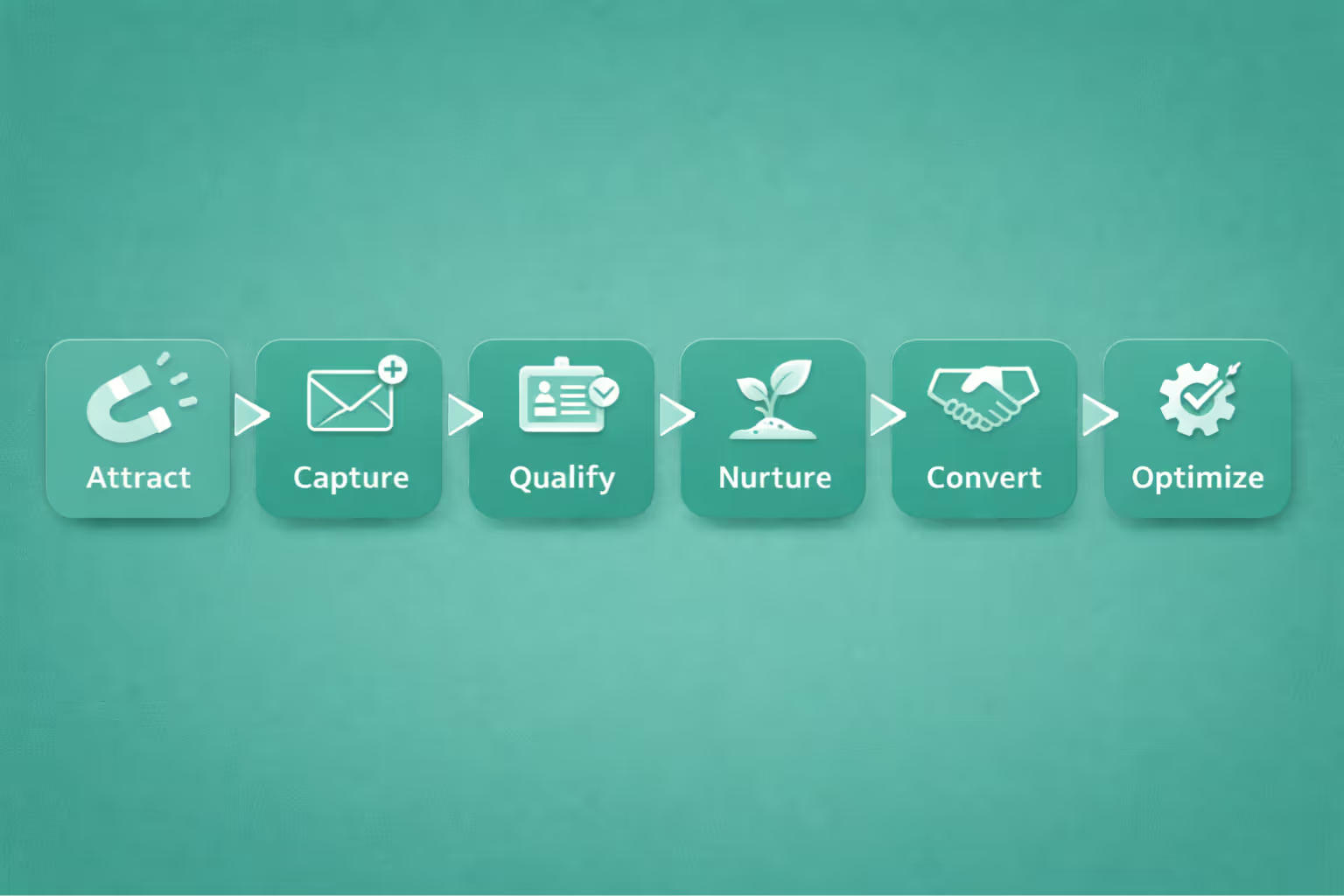
- Define your ICP (Ideal Customer Profile): Identify your Ideal Customer Profile (the type of company that benefits most from your product) and the buyer personas (the people inside those companies) by detailing what industry, company size and decision-maker roles you are targeting.
- Build a high-quality lead list: Use a CRM and lead generation tools like LinkedIn Sales Navigator to build a prospect list. Observe where they are most active and engage with them, and build connections. Continuously clean data to ensure emails/phones are valid.
- Multi-channel outreach strategy: Based on your ICP, create content and decide what inbound and outbound tactics to mix. Content can be SEO blogs, a webinar, a case study, or a whitepaper, customized to your buyers’ pain points. For inbound, put your best research behind a form to attract leads, while simultaneously running cold calls or ads aimed at high-profile accounts. Use landing pages with clear CTAs (for example, “Download Now” or “Request a Demo”).
- Lead qualification (MQL → SQL): Score the leads as they come in. Differentiate between MQLs, who have shown interest (e.g., downloaded a guide), and SQLs, who have engaged with a salesperson and are a potential client. Focus on the hot leads who have possibly requested a demo or further engagement. Our guide to lead qualification and scoring explains how.
- Lead nurturing: For leads that have potential but are not ready to buy yet, run drip campaigns, provide additional material (blogs, case studies, success stories) to move them to the next stage. See lead nurturing for the full process.
- Handoff to sales & conversion: Use a CRM (for example, Superleap) to track lead status and automate follow-ups.Automate: Data capture, follow-ups, lead assignmentKeep human: Discovery calls, negotiation, relationship-building
- Measure & optimize the funnel: Launch campaigns and test: Execute and continually test to check what is working. Adjust the strategies based on open rates, click-throughs, form completions. Identify channels yielding the best results and double down on them. The metrics table below shows what to track.
Proven B2B lead generation techniques
A strategy is your overall plan for who you target and how you reach them. Techniques, or tactics, are the individual methods you use. Each technique below shows the funnel stage it mainly serves: Attract (get noticed), Capture (collect contact details), Qualify (check fit), Nurture (build interest over time), and Convert (win the deal).
Content marketing
Create valuable content like whitepapers, blogs, case studies, and webinars to establish authority and attract leads organically. Video is key. With Youtube being the second largest search engine, video can also bring in leads: how-to and product demo videos are one way to do it.
Best for: Early-stage startups and inbound-led teams
Funnel stage: Attract → Capture
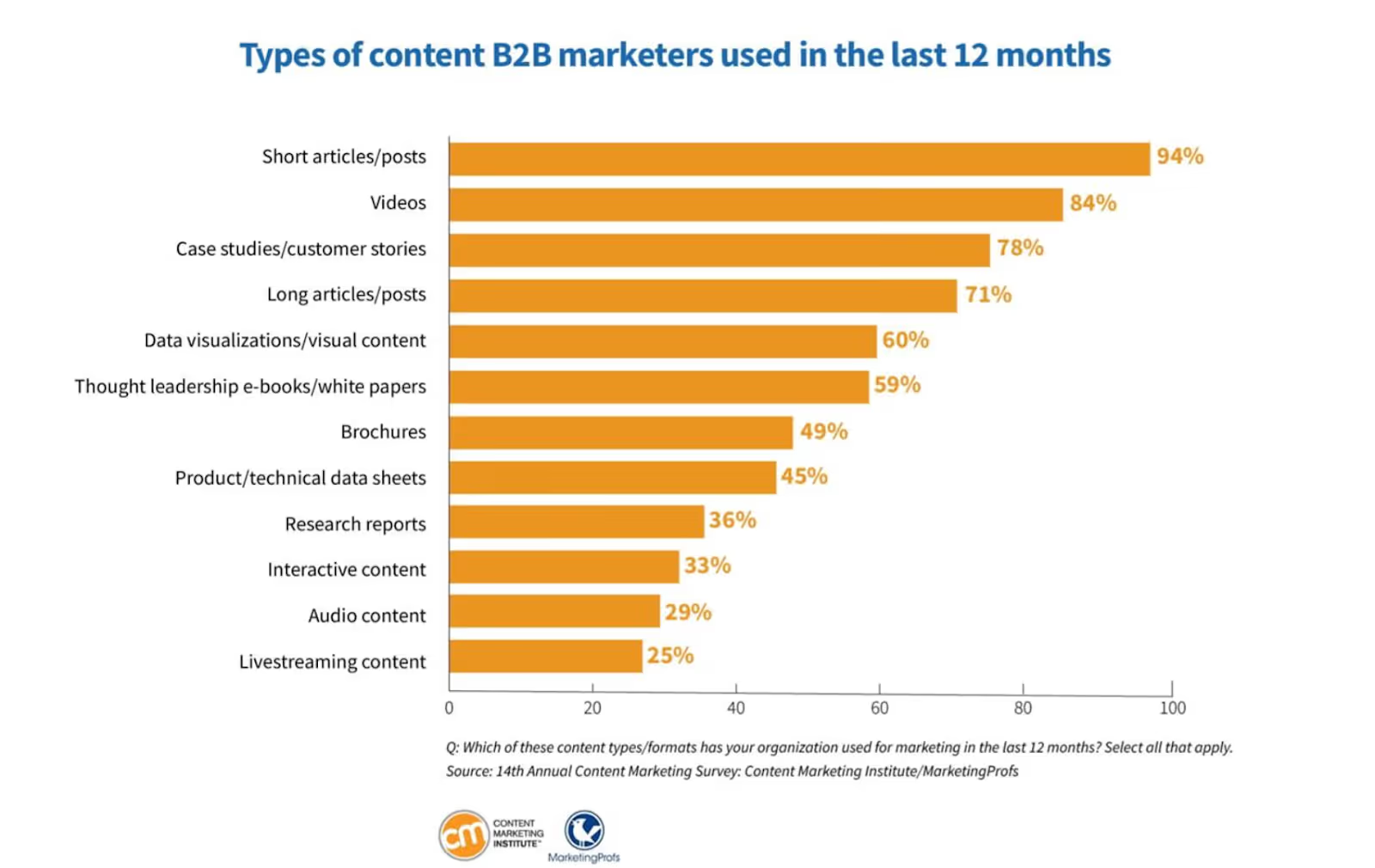
According to marketingprofs, short articles and videos are the top two content types that B2B marketers consume.
SEO/SEM
Use keywords in content to rank at the top on search engines and for people to find you via search. Running paid ads on google and linkedin also helps target decision-makers by role or company.
Best for: Mid-market and scale-stage businesses
Funnel stage: Capture → Qualify
Example: Ranking for “Best cloud solutions for pharma companies” can pull in highly qualified leads searching for solutions.
Social media & LinkedIn
LinkedIn is one of the best lead generation platforms for B2B. In the same CMI and MarketingProfs research, 84% of B2B marketers named it the organic social platform that delivers the best value.
Actively post content, join groups, write comments and run ads.
Other networks like Twitter, Facebook, and Instagram can raise brand awareness and engage prospects casually.
Best for: Thought leadership, outbound prospecting, and account-based marketing (ABM)
Funnel stage: Attract → Nurture
Email marketing
Build a target email list and connect via cold outreach, personalized emails or sending them newsletters that will help keep your company stay-top-of-mind. Check consent rules first.
Best for: Outbound-led and SDR-heavy teams
Funnel stage: Qualify → Nurture
According to Statista, Email marketing revenue is expected to touch $17.9 billion by 2027, a $10 billion increase since 2020, which is a 13.3% compound annual growth rate.
Webinars, in-person & online events
Host live webinars or virtual roundtable discussions which are powerful for the B2B audience. This way you are educating the leads and also capturing their information at the same time.
You can offer timely Q&A sessions, downloadable presentations, and follow-up emails to attendees.
Best for: Enterprise and complex sales cycles
Funnel stage: Capture → Nurture
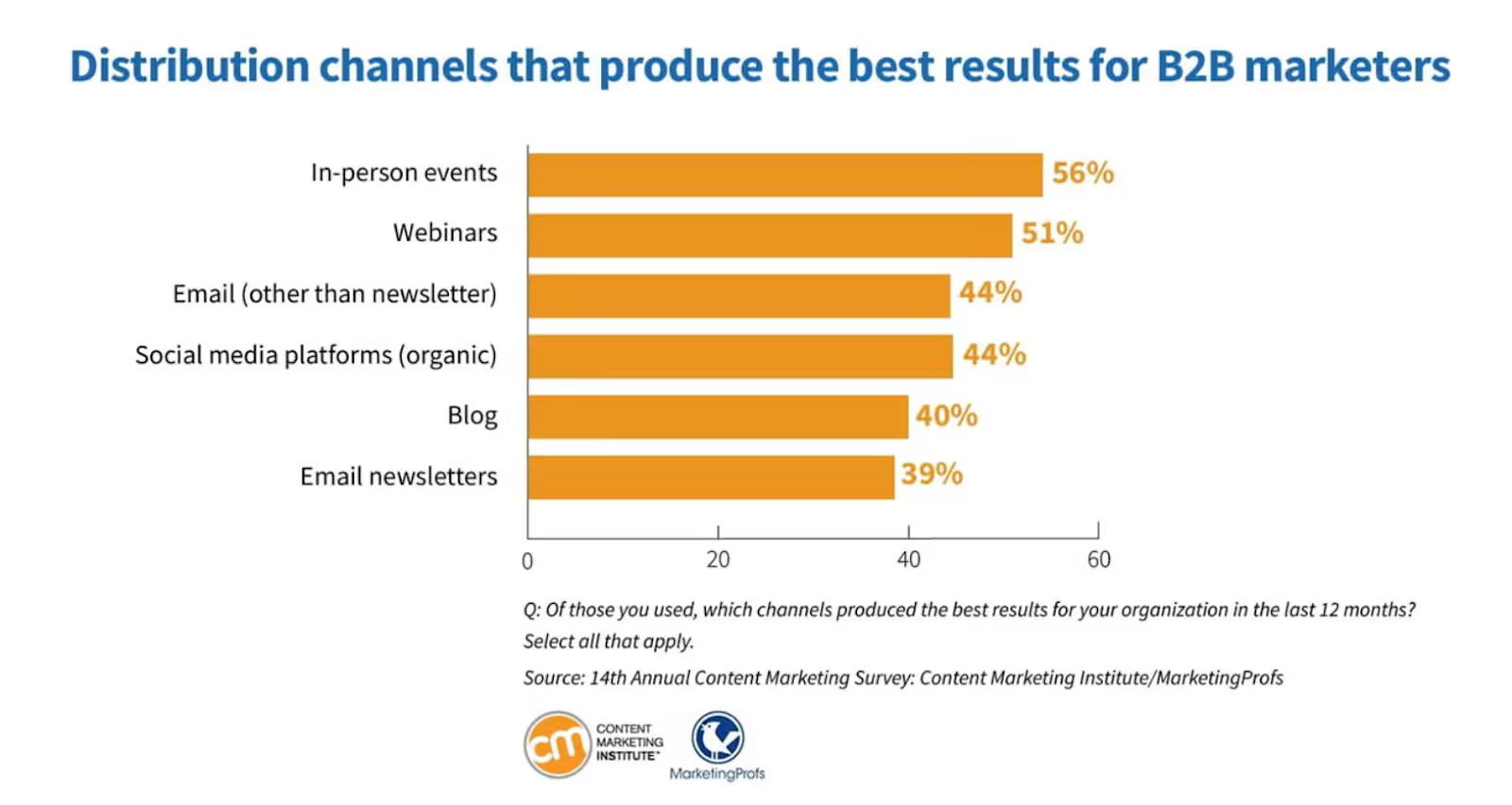
According to marketingprofs, in-person events and webinars are the top two, most effective content distribution channels.
Example: Webinars at Autodesk.According to a customer story from webinar platform ON24, Autodesk Construction Solutions’ APAC team used webinars and virtual events to generate leads and move them through the funnel. Recorded sessions were shown as live “simulive” events and kept on demand, and engagement data flowed into their marketing automation so sales could follow up quickly. ON24 reports a 12x return on pipeline within six months, 80% faster lead follow-up and meeting conversion, and 10% shorter sales cycles. These are vendor-reported results. Read the full story.
Paid ads
Use pay-per-click campaigns on Google, LinkedIn, or industry sites to drive qualified traffic to your offers (demos, free trials, etc.). Paid search, also called search engine marketing (SEM), puts you at the top of results for the keywords you choose. Target decision-makers by role or company, and send high-profile accounts to dedicated landing pages.
Best for: Scaling demand quickly
Funnel stage: Capture
Cold outreach
Cold outreach works best when it is backed by research. Sales teams usually reach out to prospects who fit the ICP via call, email, or LinkedIn messaging. Check consent and do-not-contact rules before you send or call.
Best for: Outbound motion
Funnel stage: Qualify
Referral & testimonials
Reviews, customer testimonials, and social proof of happy customers is essential for capturing potential trust of customers. Referrals add to that trust: ask happy customers and partners for introductions, and consider rewarding them.
Best for: Late-stage funnel acceleration
Funnel stage: Convert
Account-based marketing
ABM focuses your sales and marketing effort on a short list of target accounts. For high-value clients, tailor your campaigns to that specific account. For example, customizing your website or ads for that company and sending out personalized emails.
Best for: Enterprise deals
Funnel stage: Nurture → Convert
Partnerships & co-marketing
Team up with companies that serve the same buyers but do not compete with you. Joint webinars, shared content, and referral arrangements put you in front of a ready-made audience.
Best for: Companies with complementary products
Funnel stage: Attract → Capture
Intent signals
Buyer intent data shows which companies are researching topics related to your product. Use it to prioritize outreach to accounts that are likely ready to talk. See our guide to buyer intent data.
Best for: Outbound-led teams with a defined ICP
Funnel stage: Qualify
Review sites and marketplaces
Listings on review sites and software marketplaces put you in front of buyers who are already comparing options. Keep your profile current and track the leads that arrive from it.
Best for: Software and services companies
Funnel stage: Capture
Interactive tools and lead magnets
Calculators, assessments, and templates give visitors something useful in exchange for their details.
Best for: Teams with a clear buyer problem to solve
Funnel stage: Capture
AI in B2B lead generation
AI is changing how B2B teams find and engage leads. It can research and enrich prospect lists, score leads on fit and behavior, draft personalized outreach, and follow up on new enquiries within minutes. Used well, it takes repetitive work off your team so they spend more time in conversations with buyers.
Keep a person in the loop for what matters: check data quality, review outreach before it goes out, and make sure automated contact follows consent rules. Our AI for sales and AI sales tool guides go deeper.
B2B lead generation best practices
These habits apply across every technique above:
- Review your ICP regularly. Check it against the deals you have won and lost, and update it as your product and market change.
- Agree on lead definitions. Sales and marketing should define MQL and SQL together, and agree how fast sales will follow up.
- Respond fast. A new enquiry that waits days for a reply is easy to lose.
- Personalize with real signals. Use role, industry, and recent activity in your outreach, not a generic template.
- Give each channel an owner. One person should be accountable for its results.
- Measure by pipeline and revenue. Lead volume alone can hide poor quality.
B2B lead generation tools
Compliance for B2B lead generation
Lead generation involves personal data and direct contact, so a few rules apply. These are general pointers, not legal advice. Confirm current requirements with your legal team.
- Consent and opt-outs: Record where each contact came from, and honor opt-outs quickly.
- Data protection laws: GDPR, CCPA, and India’s DPDP Act apply depending on where you and your contacts are.
- Email rules: Anti-spam laws such as CAN-SPAM set requirements for commercial email.
- Calls and messages: Check do-not-contact registries before you call or text.
- Platform terms: Follow the rules of LinkedIn and other platforms when you collect data and send messages.
Challenges in B2B lead generation
Key B2B lead generation metrics
- Lead conversion rate
- MQL → SQL rate
- Cost per lead (CPL)
- Sales cycle length
- Pipeline contribution by channel
Key B2B lead generation metrics
Conclusion
With the right mix of strategy, tools, and persistence, B2B lead generation can deliver a steady sales pipeline and long-term growth. Start with a clear ICP, pick two or three channels, and fix your follow-up before you scale.
To capture leads from every channel, score and assign them, and track them through your pipeline, see how Superleap AI CRM supports your sales team.




%201%20(1).svg)
.svg)
.svg)
.svg)
.svg)