



TL;DR
B2B marketing focuses on building relationships and guiding multiple decision-makers through longer, more complex buying journeys,especially in India, where trust, WhatsApp conversations, and stakeholder approvals play a big role.
To succeed, businesses should:
- Align content with each stage of the buyer journey (awareness → decision)
- Prioritize high-value, educational content over volume
- Use account-based marketing (ABM) and personalization
- Distribute content effectively across channels like LinkedIn, email, webinars, and WhatsApp
A CRM is critical for managing multiple stakeholders, tracking interactions, automating campaigns, and aligning sales with marketing.
Performance should be measured using KPIs like MQLs, SQLs, conversion rates, CAC, CLV, and CPL.
Common challenges include long sales cycles, poor lead quality, lack of personalization, and unclear ROI but these can be solved with better targeting, content strategy, CRM usage, and data-driven optimization.
What is B2B marketing?
B2B marketing vs B2C marketing: Key differences
How to create a B2B marketing strategy?
1. Define your business goals
Start by identifying what you want your marketing efforts to achieve. Your goals could include generating more qualified leads, increasing brand awareness, entering a new market, improving customer acquisition, or contributing more revenue to the sales pipeline. Set specific and measurable goals so your marketing team knows what it is working toward and can evaluate whether its efforts are delivering results.
2. Define your ideal customer profile
Your ideal customer profile (ICP) describes the type of business that is most likely to need and benefit from your product or service. Look at factors such as industry, company size, revenue, location, business model, and common challenges. A clearly defined ICP helps you focus your resources on companies with the highest potential instead of trying to market to every business.
3. Identify your buyer personas
Once you know which companies you want to target, identify the people within those companies who influence or make purchasing decisions. A B2B purchase may involve multiple stakeholders, including executives, department heads, managers, and end users. Build buyer personas around their responsibilities, goals, pain points, objections, and priorities. This allows you to create messaging and content that addresses what each stakeholder actually cares about.
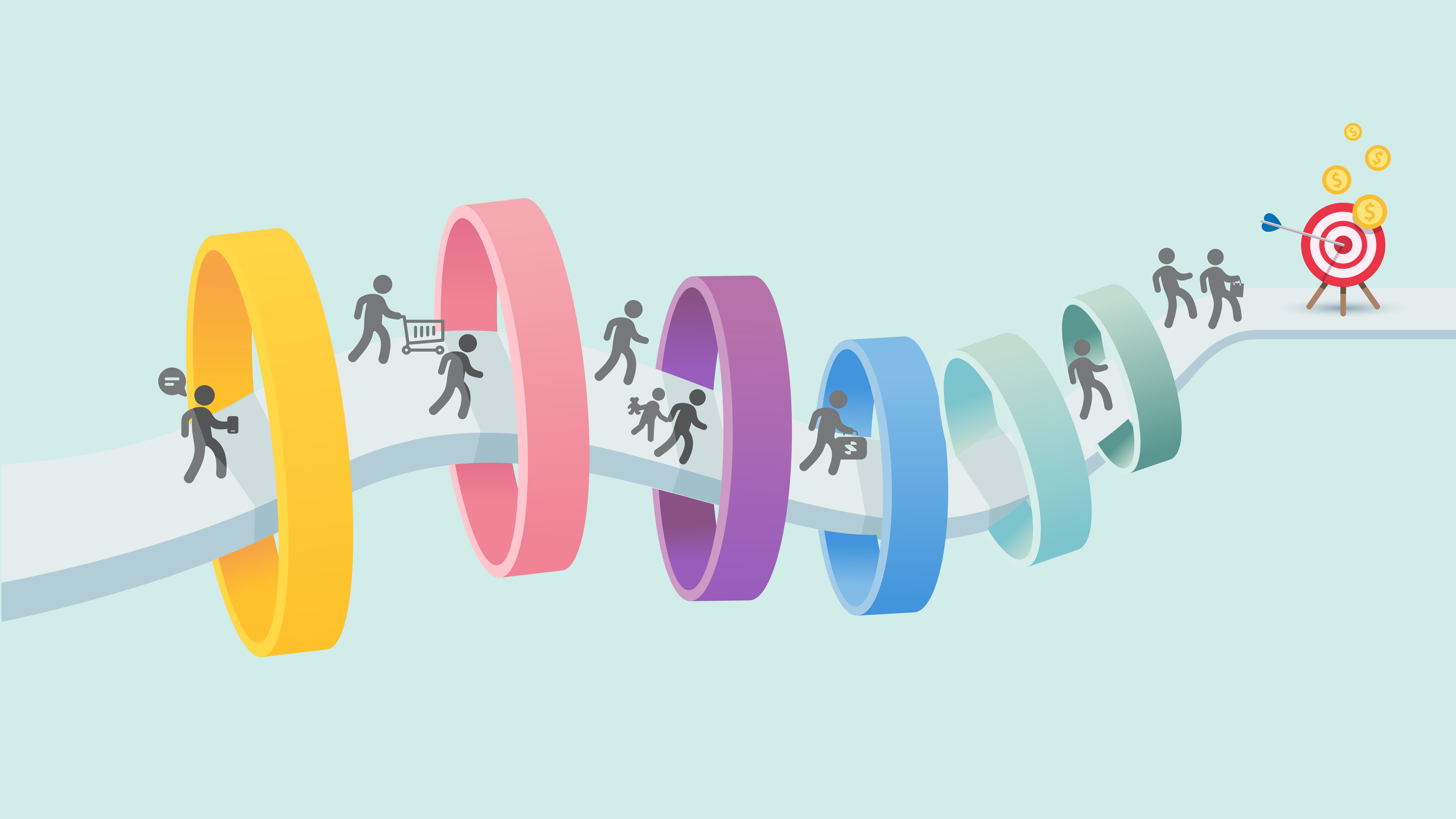
4. Map the B2B buyer journey
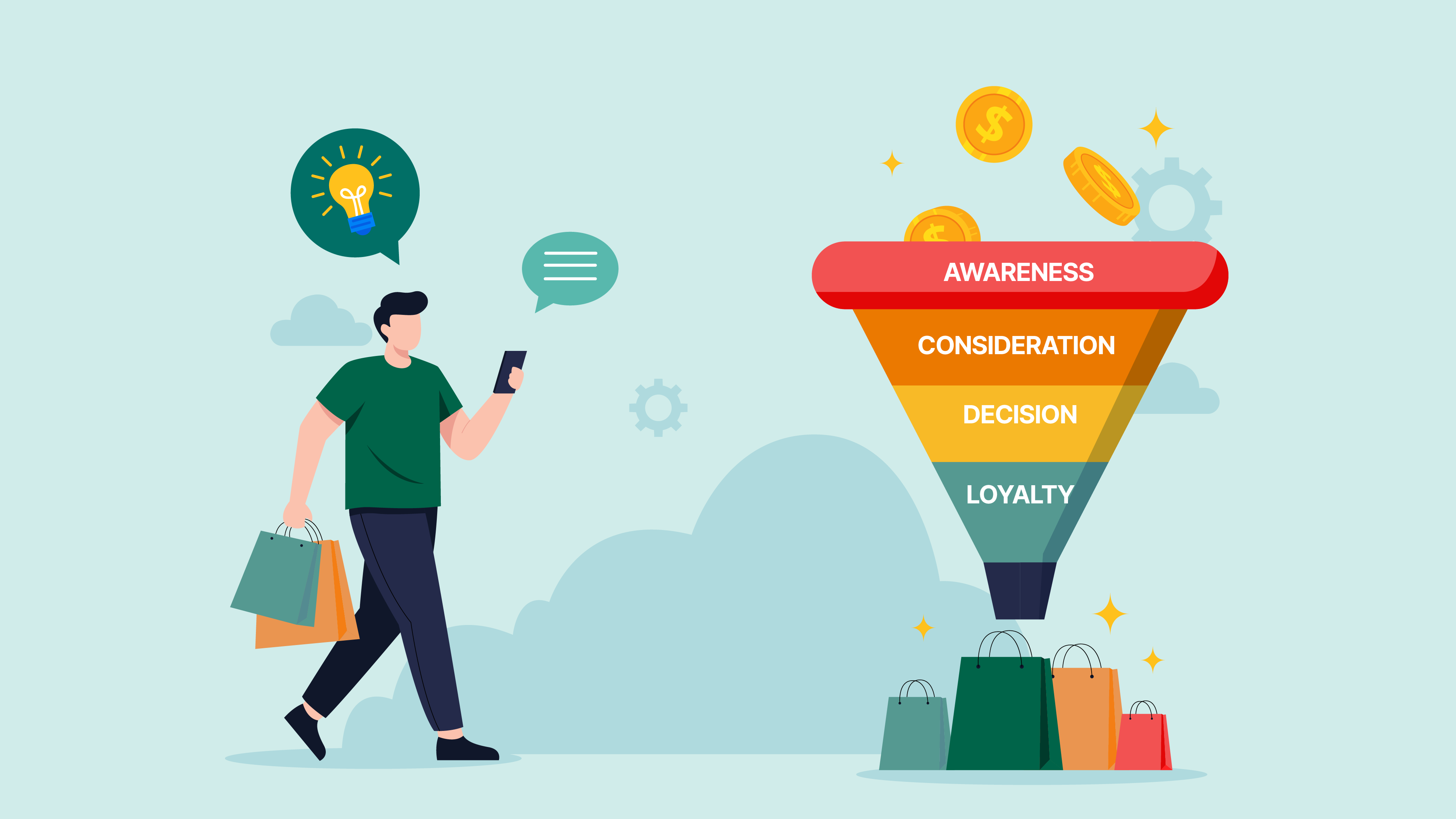
Understand the steps potential customers take before deciding to buy from you. A typical B2B buyer journey may include awareness, consideration, evaluation, decision, and post-purchase stages. At each stage, identify what buyers need to know, the questions they are likely to ask, and the obstacles that could prevent them from moving forward. This helps you create relevant content and campaigns that support buyers throughout their decision-making process.
5. Choose your marketing channels
Select marketing channels based on your audience, goals, and buyer behaviour. Depending on your target customers, this could include SEO, email marketing, LinkedIn, paid advertising, webinars, events, partnerships, or industry publications. Rather than spreading your resources across every available channel, focus on the ones where your ideal customers are most likely to discover, research, and engage with your brand.
6. Create your content strategy
Create content that answers your audience's questions and helps them solve problems at different stages of the buyer journey. This could include blog posts, case studies, whitepapers, reports, webinars, videos, comparison pages, and product guides. Your content should demonstrate your expertise and provide genuine value instead of constantly promoting your product. A strong content strategy can help attract potential customers, build trust, and keep your brand top of mind during a long sales cycle.
7. Align marketing with sales
Marketing and sales need to work together to turn marketing activity into business results. Both teams should agree on the definition of a qualified lead, the process for handing leads from marketing to sales, and the information sales representatives need to have meaningful conversations with prospects. Sales feedback can also help marketing understand common objections, customer pain points, and questions that should be addressed through campaigns and content.
8. /Measure and optimize
Track your marketing performance regularly to understand which activities are contributing to your goals. Depending on your objectives, important metrics may include website traffic, lead generation, conversion rates, cost per lead, lead quality, pipeline contribution, customer acquisition cost, and revenue. Use these insights to identify what is working, improve underperforming campaigns, and invest more resources in the channels and strategies that generate meaningful results. A B2B marketing strategy should evolve as your audience, market, and business goals change.
B2B content marketing: 7 strategies that actually work
1. Map content to the buyer’s journey
B2B buyers move through multiple stages before making a decision, so your content should align with each step. Use educational blogs and guides to build awareness, case studies and webinars to support evaluation, and demos or testimonials to drive final decisions. This ensures prospects always find relevant information as they progress.
2. Focus on high-value, educational content
B2B audiences prioritize depth and relevance over volume. Content like whitepapers, detailed guides, and case studies helps establish credibility and positions your brand as a trusted advisor. The goal is to solve real problems, not just promote your product.
3. Leverage account-based content (ABM)
Account-Based Marketing (ABM) shifts focus from mass content broadcasting to building targeted campaigns for a curated list (20-100 companies). For Indian B2B teams, this means identifying specific targets (e.g., 30 pharma distributors in Gujarat/Maharashtra), creating tailored content (e.g., a case study on distribution pain points), and using channels like WhatsApp for proactive sharing before the first sales call.
Indian ABM Toolkit: LinkedIn Sales Navigator for contact mapping, Superleap CRM for tracking and follow-up, and WhatsApp Business for personalized outreach.
4. Use data-driven personalization
With Superleap CRM, you can segment your contact list by industry, company size, deal stage, or last interaction date, and trigger personalised content sequences automatically. A pharma distributor gets the hospital procurement case study. A textile manufacturer in Ahmedabad gets the Gujarati-language ROI one-pager. Your marketing touches the right person with the right content at the right stage without your team doing it manually each time.
5. Repurpose and distribute content effectively
Creating content is only part of the strategy; distribution drives results. Repurposing content into different formats, such as turning blogs into social posts or webinars into videos, helps extend reach and ensures consistent visibility across multiple channels.
6. Align content with sales goals
Content should directly support the sales process. This includes creating materials that address objections, answer common questions, and help sales teams close deals more effectively. Close collaboration between marketing and sales ensures content drives revenue, not just traffic.
7. Measure and optimize performance
Tracking performance is essential to improving your content strategy. By analyzing metrics like engagement, lead quality, and pipeline impact, businesses can identify what works, refine their approach, and continuously improve results over time.
B2B marketing channels in India
1. LinkedIn marketing
LinkedIn is the most effective social platform for B2B marketing in India, thanks to its concentration of professionals and decision-makers. Businesses use it for thought leadership, targeted advertising, and account-based marketing campaigns. Compared to other platforms, LinkedIn tends to deliver higher-quality leads, especially for mid-market and enterprise audiences.
2. Email marketing
Email remains one of the most reliable channels for nurturing B2B leads in India. It enables businesses to stay connected with prospects through personalized communication, educational content, and timely follow-ups. When segmented and automated effectively, email marketing helps guide leads through long sales cycles and strengthens customer relationships over time.
3. Paid advertising
Paid channels such as Google Ads and Meta ads are widely used to drive demand and generate leads quickly. Search ads capture users actively looking for solutions, while display and social ads support retargeting and brand awareness. In India, performance marketing is especially valuable for scaling SaaS and service-based businesses.
4. Webinars and virtual events
Webinars have become a highly effective channel for engaging B2B audiences in India. They allow companies to share insights, demonstrate expertise, and interact directly with potential customers. Value-driven sessions that focus on solving real problems tend to perform better than purely promotional content, making webinars a strong tool for both lead generation and trust-building.
5. Whatsapp marketing
WhatsApp plays a unique role in India’s B2B ecosystem due to its widespread adoption. Businesses use it for quick follow-ups, sharing documents, scheduling meetings, and providing support. Its real-time, conversational nature helps create a more personal connection with prospects, often accelerating decision-making.
B2B marketing channel selector
How a CRM supports B2B marketing: 6 specific ways
In Indian B2B marketing, deals rarely involve just one person. A ₹15 lakh software sale might travel through the department manager who spotted the problem, the procurement lead who manages the budget, the IT team who evaluates integration risk, and the founder or CFO who signs off. Without a system that tracks all these contacts, their last interactions, and their position in the decision hierarchy, your sales team loses context at every handoff and deals die quietly.
A CRM built for Indian B2B teams maps every stakeholder in an account, logs WhatsApp and email conversations, and alerts your sales rep when an account has been silent for too long. Here's what a CRM does for your B2B marketing, specifically:
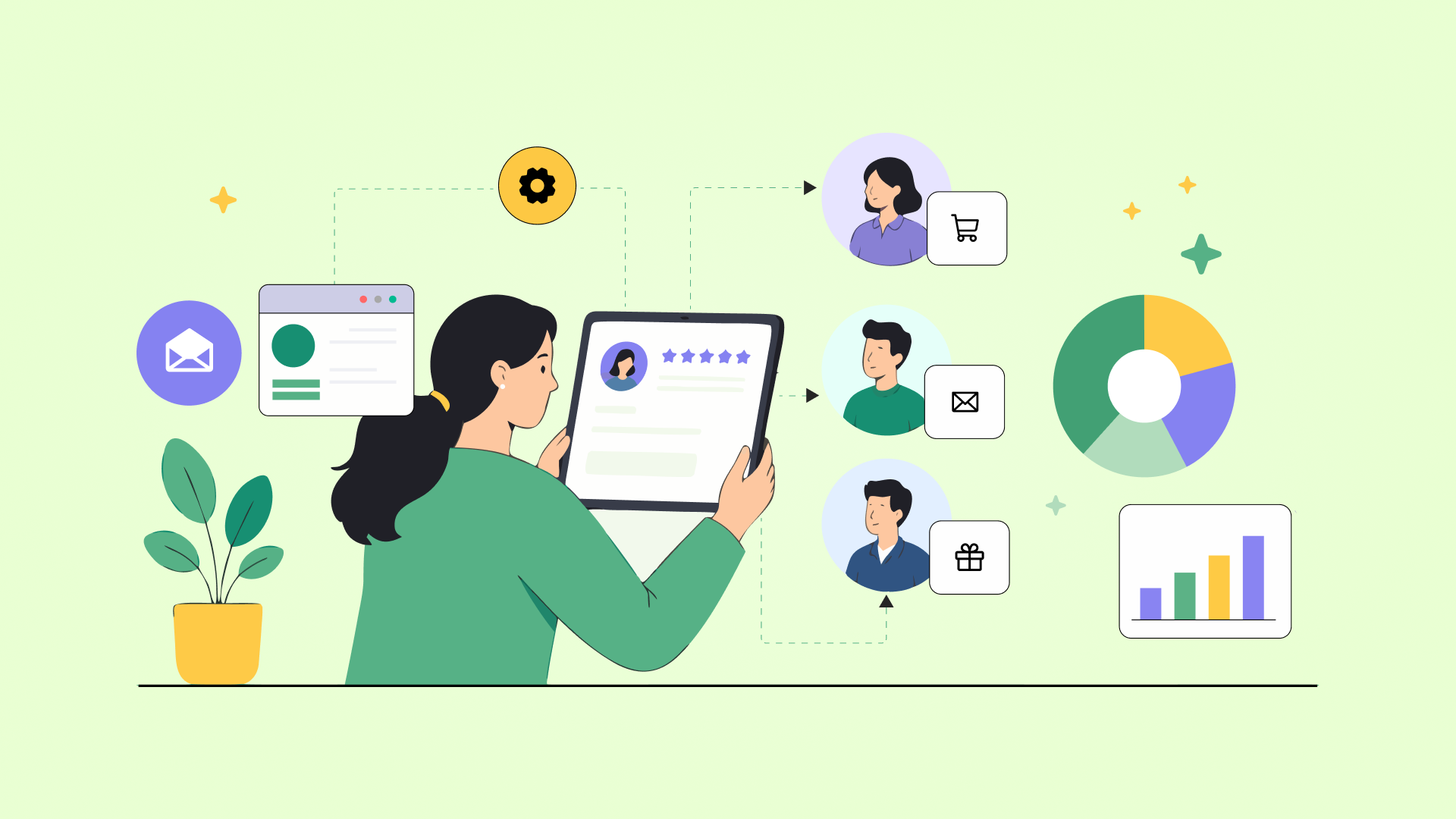
In B2B marketing, where buying journeys are longer and involve multiple stakeholders, a CRM (Customer Relationship Management) system helps teams stay organized, aligned, and data driven.
1. Centralized customer data
A CRM brings all customer and account information like contacts, interactions, and deal history into one place. This gives marketing and sales teams a complete view of each account and improves collaboration. Superleap CRM centralizes all of this for Indian sales and marketing teams: contacts, deal history, and communication logs in one place, accessible from mobile.
2. Lead management and qualification
CRM systems help capture, track, and score leads based on their likelihood to convert. This allows teams to prioritize high-quality leads and improve conversion rates.
3. Account-based marketing (ABM)
B2B marketing often targets key accounts instead of individuals. CRM helps track multiple stakeholders within a company and personalize outreach for high-value accounts.
4. Marketing automation and personalization
With CRM integrations, businesses can automate campaigns and deliver personalized messaging based on user behavior, industry, or stage in the funnel.
5. Sales and marketing alignment
CRM ensures both teams work from the same data, enabling smoother lead handoffs, better communication, and a more efficient pipeline.
6. Performance tracking and insights
CRM provides reports and analytics to measure campaign performance, track pipeline progress, and optimize marketing strategies based on real data.
B2B marketing KPIs: How to measure what actually matters
1. MQLs (Marketing Qualified Leads)
MQLS represent leads who have shown enough interest to be considered as potential buyers. This could include actions such as signing up for webinars, downloading content.
Tracking MQLs helps in understanding whether your campaigns are attracting the right audience.
2. SQLs (Sales Qualified Leads)
These are leads vetted by the sales team and ready for outreach.
If conversion is low, it is mostly because your lead quality or targeting is off.
3. Lead to Customer Conversion Rate
This tracks how many leads actually convert into buying customers.
It is a key indicator of marketing effectiveness as it reflects the entire funnel performance.
4. Customer acquisition cost
This refers to the cost of acquiring a new customer which includes marketing and sales expenses.
A high CAC indicates discrepancies in the marketing campaign.
5. Customer lifetime value (CLV)
This refers to the purchases a customer makes while doing business with you over a specific period of time.
A successful business has a higher CLV than CAC.
6. Cost per lead (CPL)
This measures how much you spend to acquire a single lead.
While useful, CPL should never be evaluated in isolation; cheap leads aren’t valuable if they don’t convert. Always pair this KPI with lead quality metrics like MQL to SQL conversion.
Common challenges in B2B marketing
1. Long and complex sales cycles
Challenge: B2B buyers take time to evaluate options, involve multiple stakeholders, and require approvals; slowing down conversions.
Solution:
- Use lead nurturing campaigns (email, content, webinars) to stay engaged
- Map content to each stage of the buyer journey
- Use Superleap CRM to log every stakeholder interaction, set deal-stage follow-up reminders, and see the full contact history for an account before every sales call
2. Generating high-quality leads
Challenge: Not all leads convert, and low-quality leads waste time and resources.
Solution:
- Implement lead scoring to prioritize high-intent prospects
- Target the channels where your Indian buyers actually are: LinkedIn for CXO awareness, WhatsApp Business for warm follow-ups after introduction, industry trade events (Auto Expo, CHEMTECH, FHRAI) for in-person relationship building in sector-specific networks
- Align marketing campaigns with your ideal customer profile (ICP)
3. Misalignment between sales and marketing
Challenge: Poor communication between teams leads to lost opportunities and inconsistent messaging.
Solution:
- Define clear criteria for MQLs and SQLs
- Use a shared CRM like Superleap where your marketing team sees which content a lead has engaged with and your sales team sees the full conversation history; no more leads lost between team handoffs
- Set up regular feedback loops between teams
4. Difficulty in personalizing at scale
Challenge: B2B buyers expect personalized experiences, but scaling personalization is tough.
Solution:
- Use segmentation and account-based marketing (ABM)
- Automate personalized email and content journeys
- Leverage CRM data to tailor messaging by role, industry, or behavior
5. Measuring ROI and attribution
Challenge: It’s hard to track which marketing efforts actually drive revenue in long sales cycles.
Solution:
- Use multi-touch attribution models
- Track the full funnel from first touch to closed deal
- Rely on CRM analytics to connect campaigns with revenue outcomes
6. Managing multiple stakeholders
Challenge: Decisions involve several people with different priorities, making it harder to influence outcomes.
Solution:
- Map stakeholders within each account
- Create role-specific content (for decision-makers, influencers, users)
- Maintain consistent communication across touchpoints
7. Content that doesn’t convert
Challenge: Generic content fails to engage or move prospects through the funnel.
Solution:
- Create content Indian B2B buyers actually use to make decisions: Hindi/vernacular language product summaries for Tier 2 procurement managers, ROI data sheets with ₹-denominated examples, and 3-minute video testimonials from recognizable Indian customer names
- Address real customer pain points
- Continuously test and optimize content performance
Conclusion
B2B marketing is no longer just about reaching businesses; it’s about building meaningful relationships, navigating complex buying journeys, and delivering consistent value at every touchpoint. From understanding how B2B differs from B2C to implementing effective content strategies, overcoming common challenges, and leveraging CRM systems, success lies in being both strategic and customer centric.
By aligning marketing with sales, personalizing engagement, and using data to guide decisions, businesses can move beyond generic campaigns to create experiences that truly resonate with their target accounts. As highlighted throughout this guide, the combination of high-quality content, structured processes, and the right tools can turn B2B marketing from a long, uncertain cycle into a predictable growth engine.







.jpg)

.jpg)























%201%20(1).svg)
.svg)
.svg)
.svg)
.svg)